
Fat Blaster
Also known as: L-Carnitine + B-vitamin blend
Lipo-C's training-focused cousin: the same B-vitamin core plus L-carnitine to support fatty-acid transport into mitochondria. Old-school clinic blend, not a peptide, and the trial data is thin.
Overview
Fat Blaster is a compounded injectable that builds on the MIC pattern by adding L-carnitine. The carnitine arm is the only differentiator that matters: carnitine shuttles long-chain fatty acids across the inner mitochondrial membrane, which is the rate-limiting step of fat oxidation during sustained aerobic work. Whether bumping serum carnitine via injection actually translates into measurable improvements in body composition in someone already eating a balanced diet is the question that meta-analyses have answered with a soft maybe. The injection bypasses the gut absorption ceiling that oral L-carnitine runs into, so plasma levels are higher, but plasma levels and muscle stores are not the same thing. Users who notice it most are endurance athletes and people who train fasted.
Evidence quality
L-carnitine for body composition has been studied repeatedly. A 2016 meta-analysis (Pooyandjoo et al.) found a modest 1.3 kg average weight reduction across nine trials, mostly with oral dosing. Injectable carnitine bypasses the absorption ceiling, which should in theory amplify the effect, but the head-to-head RCTs comparing injectable Fat Blaster against placebo for fat loss simply have not been done. Six decades of clinic use without major safety signals; one or two decades of marketing that has outpaced the trial base.
Benefits & timeline
Benefits
- Carnitine availability for fat-acid beta-oxidation during fasted or low-glycogen training - the one mechanistic edge over plain Lipo-C
- Same B-vitamin and methyl-donor support as MIC blends, so the baseline-energy boost is similar
- Higher plasma carnitine than oral can achieve, because injection bypasses the saturable intestinal carnitine transporter
- Cheap, widely available, and useful as a training-day adjunct in someone already running a deficit
Timeline
Week 1
Pre-workout energy lift is the most reliable subjective signal. Largely B12 and the felt sense of a fresh shot.
Week 2-4
Endurance during fasted cardio may improve slightly. Resistance training feels about the same.
Week 4-8
Body composition tracks the diet. Do not expect the injection to drive the scale.
Week 12
End of cycle. Drop to once-weekly maintenance or stop. The carnitine washes out over 7-10 days.
Dosage protocols

Advanced
2 mg
three times weekly
Beginner
1 mg
twice weekly
Standard
1 mg
three times weekly
Titration & adjustment
No titration. Start at full 1 ml IM 2–3× weekly, ideally pre-workout. If you notice the L-carnitine "fishy" body odor at higher frequencies, drop back to twice weekly.
Injection timing

IM 2–3× weekly, pre-workout for the energy boost. Same site rotation as Lipo-C.
Side effects & contraindications

- mildFishy body odor - the classic L-carnitine trimethylamine signature. More common at higher frequencies.
- mildInjection-site soreness for 12-24 hours. Worse if you train the same muscle group the same day.
- mildSome users feel mildly stimulated for 30-60 minutes after the shot - probably the combination of carnitine and B12.
- moderateNo RCT-grade evidence for body-composition outcomes. Long use is safe in the nutrient sense but the value proposition above plain B12 plus oral carnitine is not proven.
Contraindications
- Severe kidney disease - carnitine clearance matters
- Untreated hypothyroidism - the energy effect can mask under-replacement
- Trimethylaminuria - the carnitine and methionine load will make body odor dramatic
- Hemodialysis without nephrologist input - dialysis already perturbs carnitine status
Reconstitution & injection
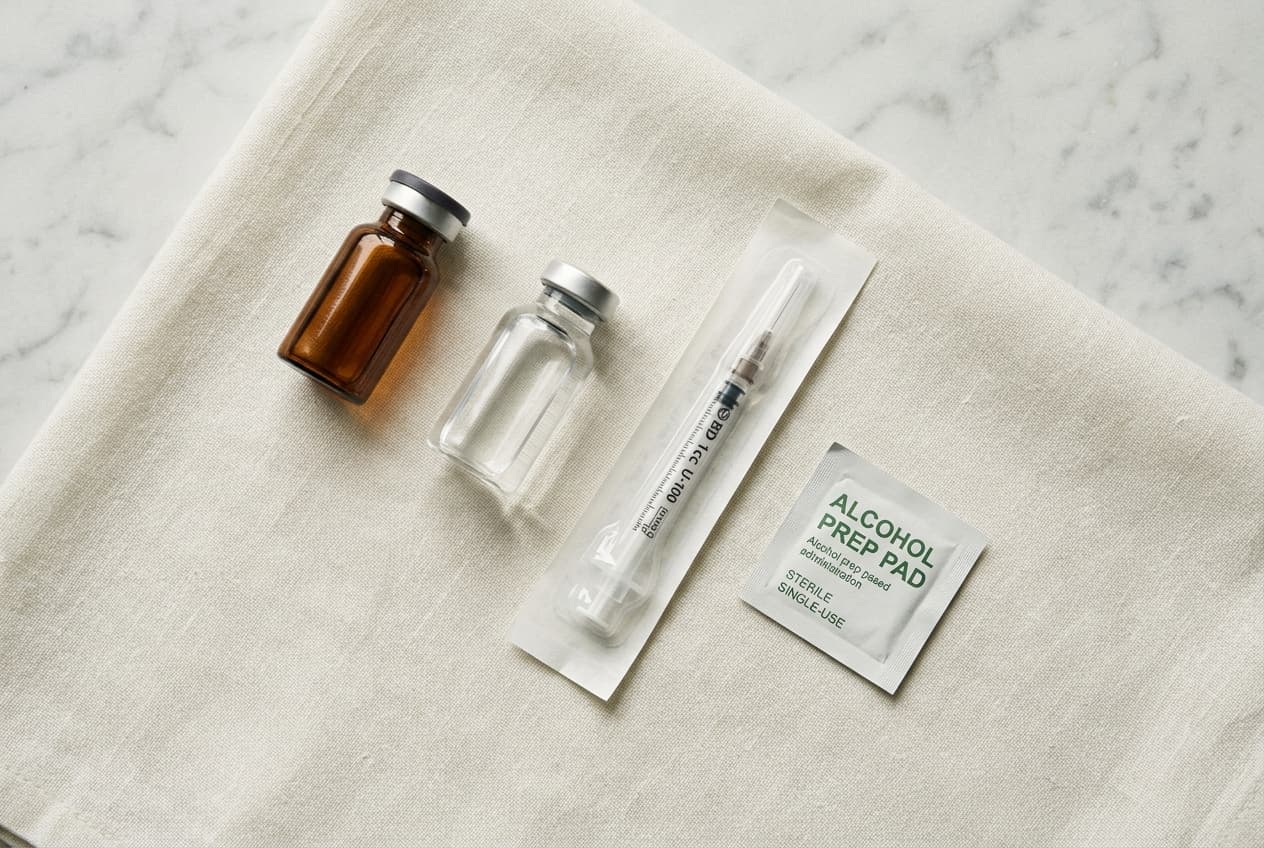
Pre-mixed multi-dose vial from a compounding pharmacy. Standard is 1 ml intramuscular into glute, deltoid, or vastus lateralis, 2-3 times weekly. Dose 30-60 minutes pre-workout on training days to ride the energy effect. No reconstitution math.
Open calculator pre-filledStorage after reconstitution
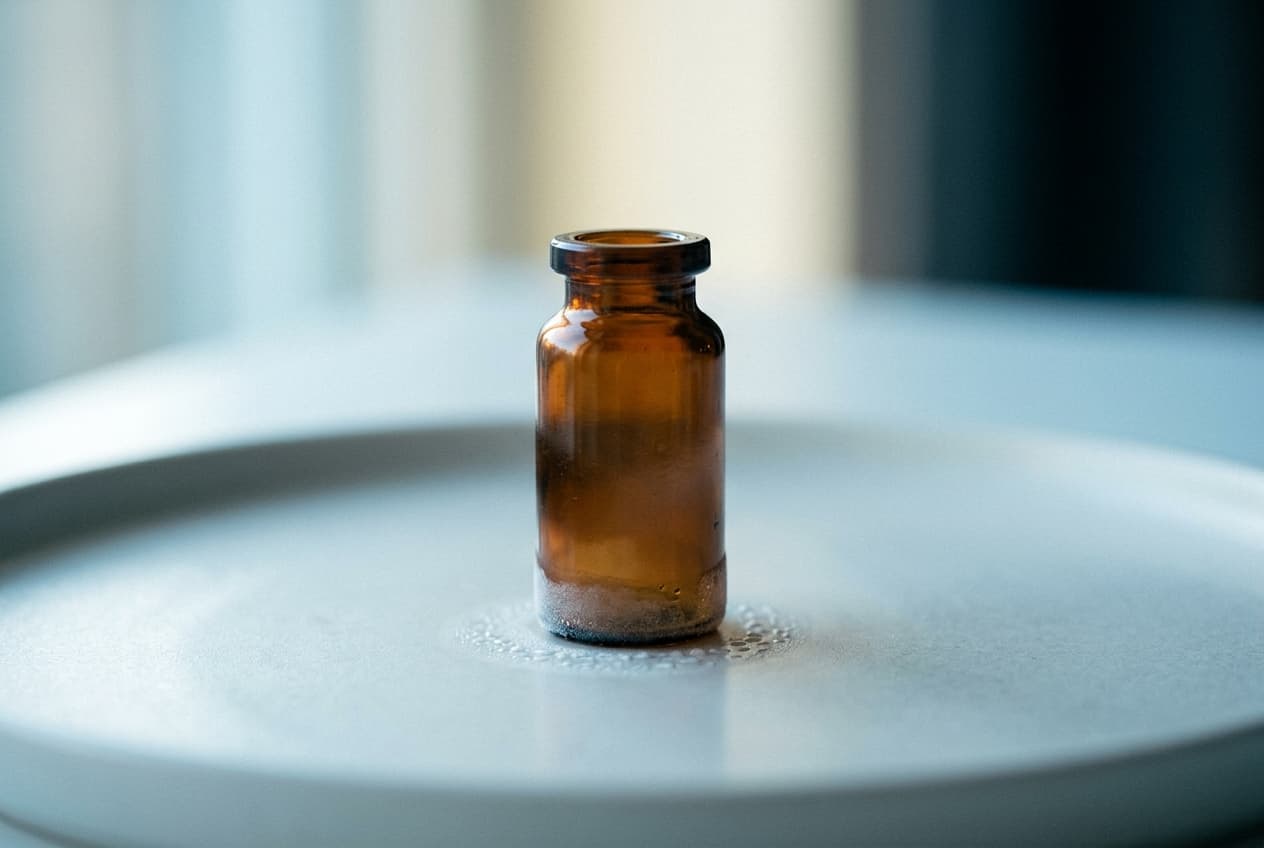
Pre-mixed multi-dose vial. Refrigerate at 2–8 °C once opened, light-protected (the B12 component is photosensitive). Use within 28 days of first puncture. Do not freeze. The carnitine fraction can crystallise if the vial is left at fridge-back temperatures below 2 °C — warm gently in your hand if you see needle-like crystals and they will redissolve. Discard if cloudy or persistently cloudy after warming.
Common mistakes
Dosing post-workout because you forgot pre-workout.
Better approach: The point of pre-workout dosing is the carnitine availability during the training session. Post-workout, you have already done the work. Skip the dose and shift the next one back to pre-workout.
Stacking it with stim-heavy pre-workout in the same window.
Better approach: They do not conflict mechanistically, but you will not be able to tell what is doing what. Do a cycle of Fat Blaster alone (or with caffeine only) before adding the rest of the supplement stack.
Daily injections.
Better approach: Carnitine half-life and muscle saturation kinetics do not justify daily dosing. 2-3 times weekly is sufficient. Daily injections just give you 2-3 more sore spots a week.
Calling it a fat burner.
Better approach: It is a transport cofactor. It does not burn fat; it lets fat get to the oxidative machinery once the demand is there. The demand has to come from training and a deficit. The honest framing keeps the expectation in proportion to what the injection can actually deliver.
Real-world tips
- Inject 30-60 minutes pre-workout on training days. The energy effect is the most reliable subjective signal and it is most useful right before the work.
- Rotate sites and use a 1 inch 25-gauge needle for IM. The volume is small but the blend can sting.
- Drink water. Carnitine pulls water into muscle slightly and the methionine load asks the kidneys to clear methyl groups.
- If the fishy odor becomes social-disruptive, drop to twice weekly or switch to a Lipo-C blend without the carnitine arm.
- Pair with creatine. The pump and recovery synergy between carnitine and creatine during training blocks is the one stack that has decent evidence and zero risk of confusion.
When something else is the better tool
Oral L-carnitine tartrate, 2 g daily with food
Use instead when: You want most of the carnitine benefit for the cost of a bottle of powder, and you are not chasing the injection-only edge. The plasma peak is lower but muscle saturation accumulates similarly over weeks.
Plain Lipo-C (no carnitine)
Use instead when: You do not train hard, or you do not train fasted. The carnitine arm only matters during demand. If your week is more sedentary than athletic, the extra component is not adding much.
Semaglutide or Tirzepatide
Use instead when: The goal is fat loss, not training-day energy. Fat Blaster is a marginal adjunct. The incretins are the actual tool for moving body weight in a clinically meaningful way.
- Is this a peptide?
- No. It is a B-vitamin, methyl-donor, and L-carnitine injection. Sold by peptide clinics because the customer base overlaps.
- Is it WADA-banned?
- L-carnitine itself is not on the WADA prohibited list, but intravenous infusion above 100 ml within 12 hours is prohibited for competitive athletes (Method M2). Intramuscular at the doses in Fat Blaster sits below the threshold, but check the current WADA list yourself - this changes.
- Why the fishy smell?
- Gut bacteria and the liver convert excess carnitine and choline into trimethylamine. If your odor becomes a problem, drop frequency or switch to a non-carnitine blend.
- Difference between Fat Blaster and Lipo-C?
- Fat Blaster adds L-carnitine. That is the only meaningful difference. If you train fasted or do endurance work, Fat Blaster has the edge. Otherwise they are interchangeable.
- Can I run this with Semaglutide?
- Yes. They do not interact mechanistically and the carnitine arm may help with the muscle preservation problem that GLP-1 monotherapy creates. Do not expect it to be the difference-maker, but it is a reasonable adjunct.