
FOXO4-DRI
Also known as: FOXO4 · FOXO4-DRI
The headline senolytic peptide — it disrupts the FOXO4–p53 interaction inside senescent cells, pushing them into apoptosis while sparing healthy cells. Striking in mice, untested in humans.
Overview
FOXO4-DRI sits at the most ambitious end of the longevity catalogue. The 2017 de Keizer paper showed that aged mice given the peptide regrew fur, lost frailty markers, and recovered kidney function — results striking enough that the peptide community embraced it immediately. The cautious read: this is a single landmark rodent study with limited independent replication, no primate data, no human trials, and a mechanism that, by definition, kills cells. Senolysis is a real therapeutic concept and the FOXO4–p53 disruption strategy is plausible, but everyone running FOXO4-DRI in humans is volunteering as the first cohort. The off-cycle is so long because the mechanism is a pulse, not a maintenance dose.
Evidence quality
The 2017 paper from Baar, de Keizer and colleagues in Cell is the foundational study — naturally aged mice and fast-aged mouse models showed hair regrowth, restored renal function, and improved fitness markers. Subsequent rodent work from other groups has been broadly supportive but smaller in scale. No primate studies, no human trials of any kind. Real-world use is fully off-protocol and the safety database is the community itself.
Benefits & timeline
Benefits
- Selectively triggers apoptosis in senescent ("zombie") cells that resist normal cell death — mechanism validated in vitro and in rodents
- Reduces senescence-associated inflammation in animal models — the chronic low-grade kind implicated in aging
- Rodent studies show fur regrowth, frailty reversal, and improved tissue function — striking but unreplicated outside the original group at scale
- Pulsed protocol means lower total drug exposure than daily peptides — a feature, given the unknowns
Timeline
Day 1–9
Three doses, every 3 days. Most users feel fatigue and flu-like symptoms 24–48 hours after each dose — the cell-clearance response, which is consistent with the mechanism.
Week 2–4
Inflammation markers may drop in users who track them. Subjective skin, hair, and joint changes start to surface here.
Week 6–8
If the peptide is going to do anything noticeable for you, it has done it by now. The cleared cells are being replaced and the system rebalances.
Week 12+
Minimum off-cycle. Repeating sooner than this is unsupported by any safety framework, animal or human.
Dosage protocols

Advanced
15 mg
every 3 days
Investigational senolytic; very long off-cycle.
Beginner
5 mg
every 3 days
Standard
10 mg
every 3 days
Titration & adjustment
Short pulse protocol: 5 mg every 3 days for three doses, then OFF for at least 12 weeks. Because the mechanism kills senescent cells (which are then replaced over weeks), the effect builds slowly after the protocol ends. Do not repeat sooner than every 12 weeks.
Injection timing

Every 3 days × 3 doses, then OFF. Time of day does not matter. Expect transient fatigue 24–48 hours after each dose — schedule around important commitments.
Side effects & contraindications

- moderateTransient fatigue and flu-like symptoms 24–48 hours after each dose. Plan around this — do not dose the night before a high-stakes day.
- mildInjection-site irritation, sometimes more pronounced than other peptides because of the higher per-dose volume.
- moderatePossible transient drop in immune cell counts in the days after dosing — extrapolated from senolytic mechanism, not directly measured in humans.
- severeEffectively no human safety data. The animal data is one landmark study and a thin replication base. "No reported deaths" is not the same as "safe".
Contraindications
- Active cancer or recent cancer history — senolytic mechanisms can interact unpredictably with tumour cells and chemotherapy
- Recent surgery or wound healing — clearing senescent cells during a repair window is the wrong timing
- Pregnancy and breastfeeding
- Severe immune compromise — a transient cell-clearance event in someone already immune-depleted is poor strategy
- Anyone unwilling to accept that they are essentially running an n=1 experiment
Reconstitution & injection
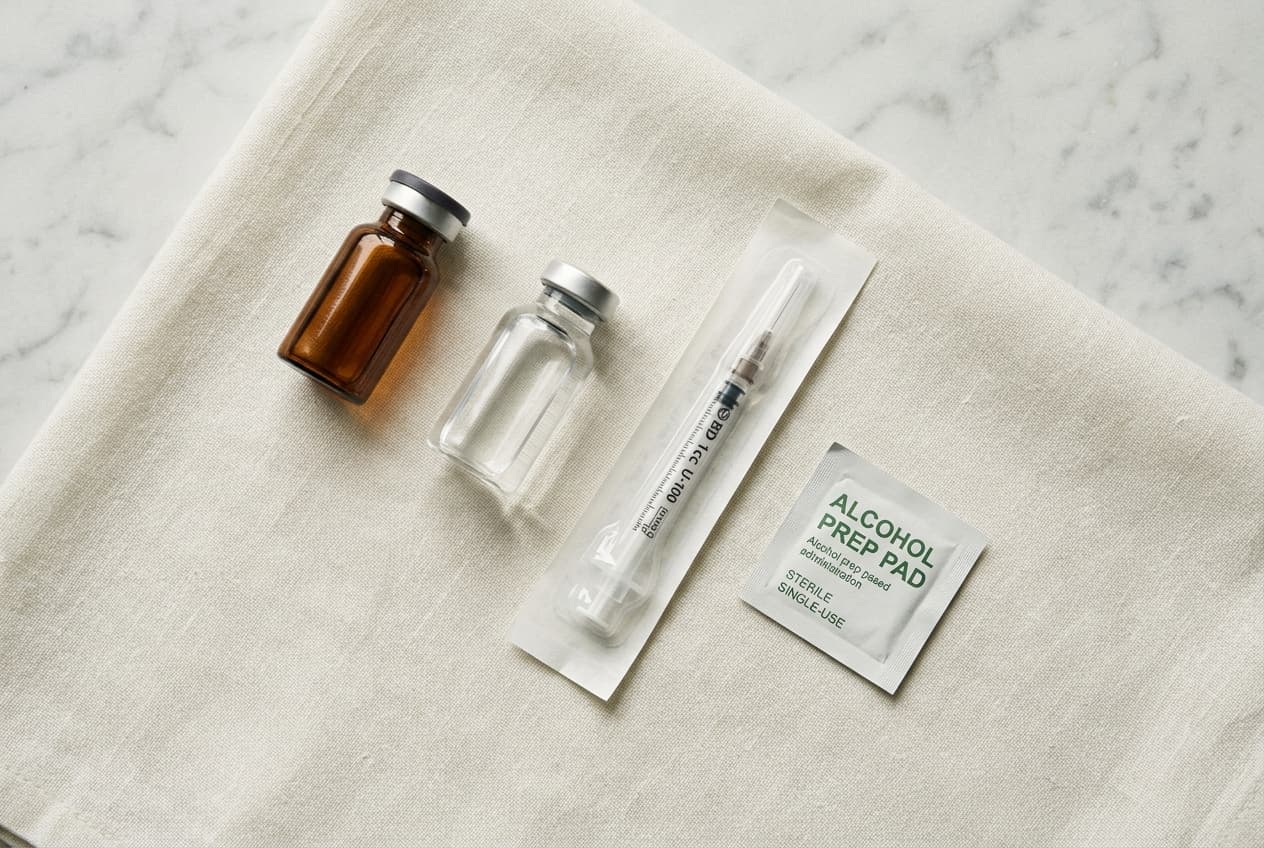
A 10 mg vial mixed with 2 ml bacteriostatic water gives 5 mg per ml. A 10 mg dose is the full vial — 2 ml. This is too much for a standard insulin syringe, so split into two 1 ml subcutaneous injections at different sites in the same session, or use a 3 ml syringe. Subcutaneous, abdomen or thigh, every 3 days for three doses, then a minimum 12-week off-period. Refrigerate; discard within a week of reconstitution given the high per-dose volume used.
Open calculator pre-filledStorage after reconstitution
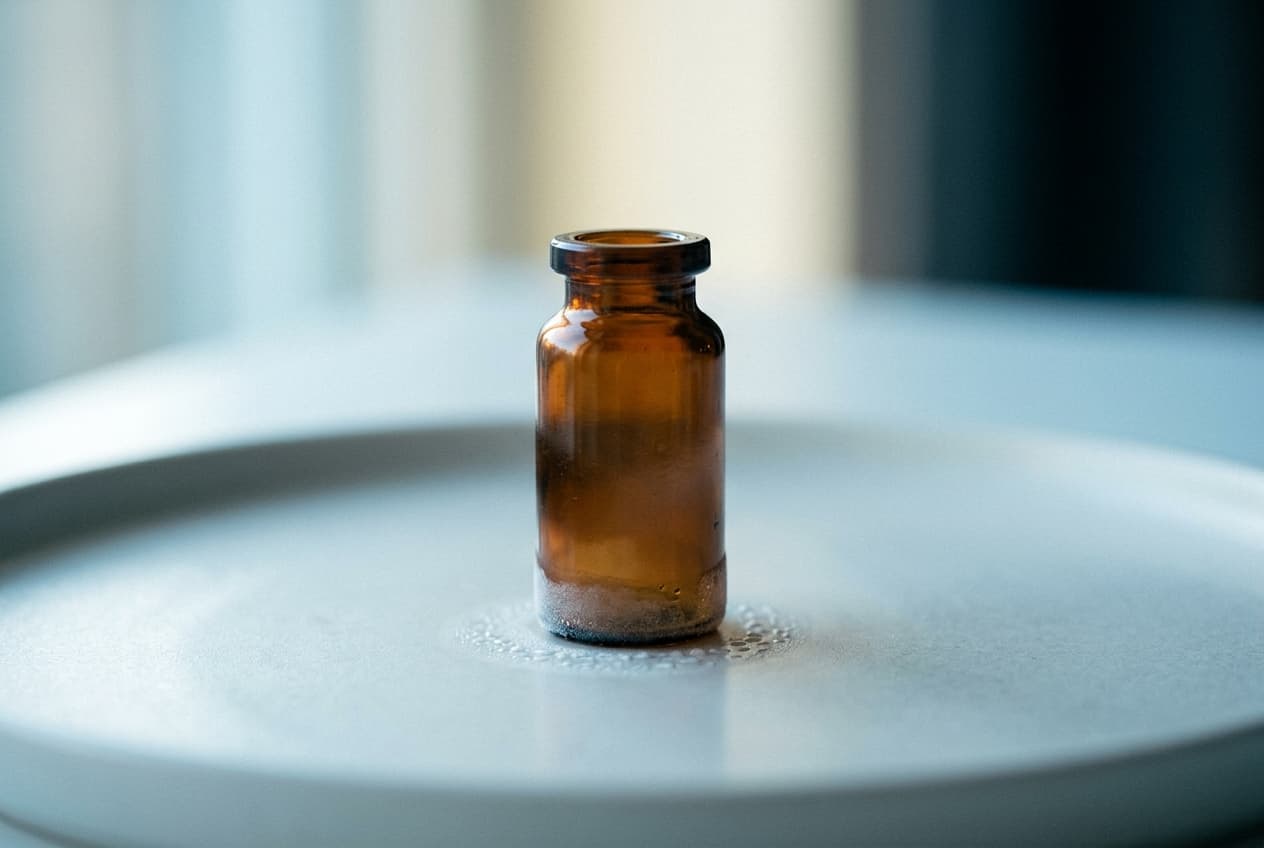
Refrigerate at 2–8 °C after reconstitution. Do not freeze. Light-protected. FOXO4-DRI is a long peptide and less stable in solution — practical window is 14 days. The dosing schedule (3 doses spaced 3 days apart, then OFF for months) means one reconstitution covers the whole course; mix the minimum volume that gives you three clean draws.
Common mistakes
Running the protocol like a peptide — weekly or monthly cycles.
Better approach: The pulse design is part of the mechanism. Three doses every 3 days, then 12 weeks off, mirrors how senescent cells accumulate and how their clearance is supposed to ripple through tissue. Daily or weekly dosing does not exist in any meaningful animal protocol.
Stacking it with anti-inflammatory peptides during the protocol week.
Better approach: The inflammation you feel after each dose is part of how the body clears the dying cells. Suppressing it with curcumin, BPC-157, or steroids may blunt the effect. If side effects are intolerable, lower the dose; do not stack.
Repeating within 12 weeks because "it felt good".
Better approach: There is no human data that supports more frequent cycling, and the animal protocols all use long gaps. You are not just dosing a peptide, you are forcing a senolytic event. Give the system time to rebuild before doing it again.
Treating it as cosmetic.
Better approach: The rodent fur-regrowth headline drove a lot of hype, but the mechanism is systemic. If you are running this peptide for hair or skin alone, GHK-Cu or topical retinoids are safer, cheaper, and have actual human data.
Real-world tips
- Schedule the protocol around a quiet 2-week window. The post-dose fatigue is real and you will not want it during a heavy work block.
- Track an inflammation marker (hs-CRP) before, at week 4, and at week 12. Subjective change is unreliable here.
- Inject in the evening so the worst of the next-day fatigue lands during sleep.
- Rotate injection sites — 2 ml of fluid in the same spot twice in a week leaves a bump.
- If you have a history of cancer, autoimmune disease, or are on any immunomodulator, do not run this without a clinician who understands senolytics.
When something else is the better tool
Dasatinib + quercetin
Use instead when: You want a senolytic protocol with at least one approved drug and a growing human evidence base. The Mayo Clinic work on D+Q in fibrotic lung disease and frailty is the most developed senolytic literature. The trade-off is more side effects and oral systemic exposure.
Fisetin
Use instead when: You want a senolytic concept with a benign safety profile, taken orally, with some human data. The effect is gentler, the evidence is mixed, but you can sleep well at night running it.
Doing nothing yet
Use instead when: You are otherwise healthy and the question "do I have a senescent cell problem that needs solving" cannot be answered yet. The field will be in a different place in five years; many of the people running FOXO4-DRI in 2025 will look back and wish they had waited.
- Is the rodent data really that good?
- Yes — the original paper is striking and the photographs of treated mice next to controls made the rounds for a reason. The catch is that the same group has produced most of the supportive work and the replication base outside that lab is thinner than the popular narrative suggests.
- Will it really make my hair grow back?
- The mice regrew fur. Humans are not mice and human hair loss has multiple drivers (androgenetic, autoimmune, telogen effluvium) that have nothing to do with cellular senescence. If your goal is hair, run minoxidil, finasteride, or topical melatonin first.
- How do I know if it worked?
- Honestly, you usually do not. Inflammation markers may shift, joints may feel better, sleep may improve — none of these are diagnostic of senolytic activity. The most rigorous self-tracking is hs-CRP, a few inflammation cytokines, and a 6-month follow-up.
- Is there any way to run this more safely?
- Start at the low dose (5 mg per shot, not 10), keep the off-cycle long (12 weeks minimum), and do not stack it with other immunomodulators. The safest version of this peptide is the one you do not run yet.