HGH (Somatropin)
Also known as: Somatropin · Human Growth Hormone · GH
Recombinant human growth hormone — the actual hormone itself, not a secretagogue. Powerful for body recomposition, with side effects that scale unmistakably with dose.
Overview
Somatropin is the FDA-approved drug. Everything else in the GH category (Sermorelin, CJC-1295, Ipamorelin, the various GHRPs) is a polite request that the pituitary make more of its own; HGH is just the hormone, bypassing the pituitary entirely. That directness is what makes it work fast and what makes the side-effect profile bigger than the secretagogues. Approved indications are adult GH deficiency, pediatric short stature, and HIV-associated wasting. Off-label use for body recomposition and anti-aging is widespread and pharmacologically straightforward, but the dose-response curve for side effects is steep enough that 2 IU and 6 IU are not the same drug in any meaningful sense.
Evidence quality
Recombinant somatropin is FDA- and EMA-approved for adult growth hormone deficiency, pediatric short stature, and HIV-associated wasting. The drug itself is well-characterised; the body of clinical literature spans four decades. The off-label use in non-deficient adults for body recomposition and anti-aging is not what the approval covers — that is an extrapolation from on-label pharmacology, supported by smaller trials in healthy older adults (Rudman 1990 is the famous one, and several follow-ups since) but not by a large RCT base in healthy populations.
Benefits & timeline
Benefits
- Visceral fat drops — the deep belly fat that diet and cardio struggle with is the most responsive tissue
- Sleep architecture improves; slow-wave sleep gets noticeably deeper within the first two weeks
- Connective tissue, skin, and hair quality improve over months, not weeks
- Recovery between training sessions shortens, which is what most users notice before the mirror does
Timeline
Week 1
Mild fluid retention; deeper sleep. The fluid is the first thing people feel and the first thing they confuse with weight gain.
Week 2–4
Sleep change consolidates. Carpal tunnel-style tingling can appear here — that is your signal the dose is at the edge of your tolerance.
Week 6–8
Visceral fat begins to drop, often visible at the waistline before the scale moves.
Week 12–16
Body composition shift is clearly visible. Skin, hair, and nail quality improve in parallel.
Off-cycle
Taper down rather than stop cold. A sharp IGF-1 drop produces a few weeks of feeling flat that an abrupt stop guarantees.
Dosage protocols
Advanced
6 iu
daily, split
Performance dose; meaningful side-effect risk.
Beginner
2 iu
daily, AM
Health/anti-aging dose.
Standard
4 iu
daily, split AM/PM
Body recomposition dose.
Titration & adjustment
Start at 1 IU/day for the first week to detect water retention and joint discomfort early. Increase by 0.5 IU/day each week up to the target dose. Anti-aging users typically settle at 2 IU/day, body-recomp users at 3–4 IU/day, performance users at 5–6 IU/day. If carpal tunnel symptoms or persistent joint pain appear, drop back 0.5 IU and hold. Always check fasting glucose and HbA1c every 8 weeks at any dose ≥2 IU/day. Taper down by 0.5 IU every week when stopping to avoid a sharp IGF-1 drop.
Injection timing

Morning fasted on an empty stomach is best for fat loss (no insulin to blunt the GH pulse). Pre-bed dosing optimises sleep architecture but may impair sleep onset in some users — test both timings. Avoid carbs or protein in the 30 minutes around injection.
Side effects & contraindications

- mildWater retention, especially in the first two weeks. Rings get tighter; faces look puffier in the mirror.
- moderateCarpal tunnel-like tingling and numbness in the hands. Almost always dose-dependent — drop 0.5 IU and it usually resolves within a week.
- moderateJoint aches, especially in fingers and knees. Same fix as the tingling: pull the dose back.
- severeInsulin resistance and elevated fasting glucose. At 2 IU/day and above, check HbA1c every 8 weeks — not optional.
- severePotential acceleration of latent cancers. The IGF-1 elevation is mechanistically uncomfortable in anyone with a history of cancer or strong family history.
Contraindications
- Active cancer or recent cancer history — IGF-1 elevation is the exact growth signal you do not want to amplify
- Severe diabetic retinopathy — GH can worsen the vascular pathology
- Acute critical illness — multiple ICU trials showed harm, not benefit, in critically ill patients on high-dose GH
- Unfused growth plates (children outside a paediatric GH protocol)
- Uncontrolled diabetes or HbA1c trending up at the screening visit
Reconstitution & injection
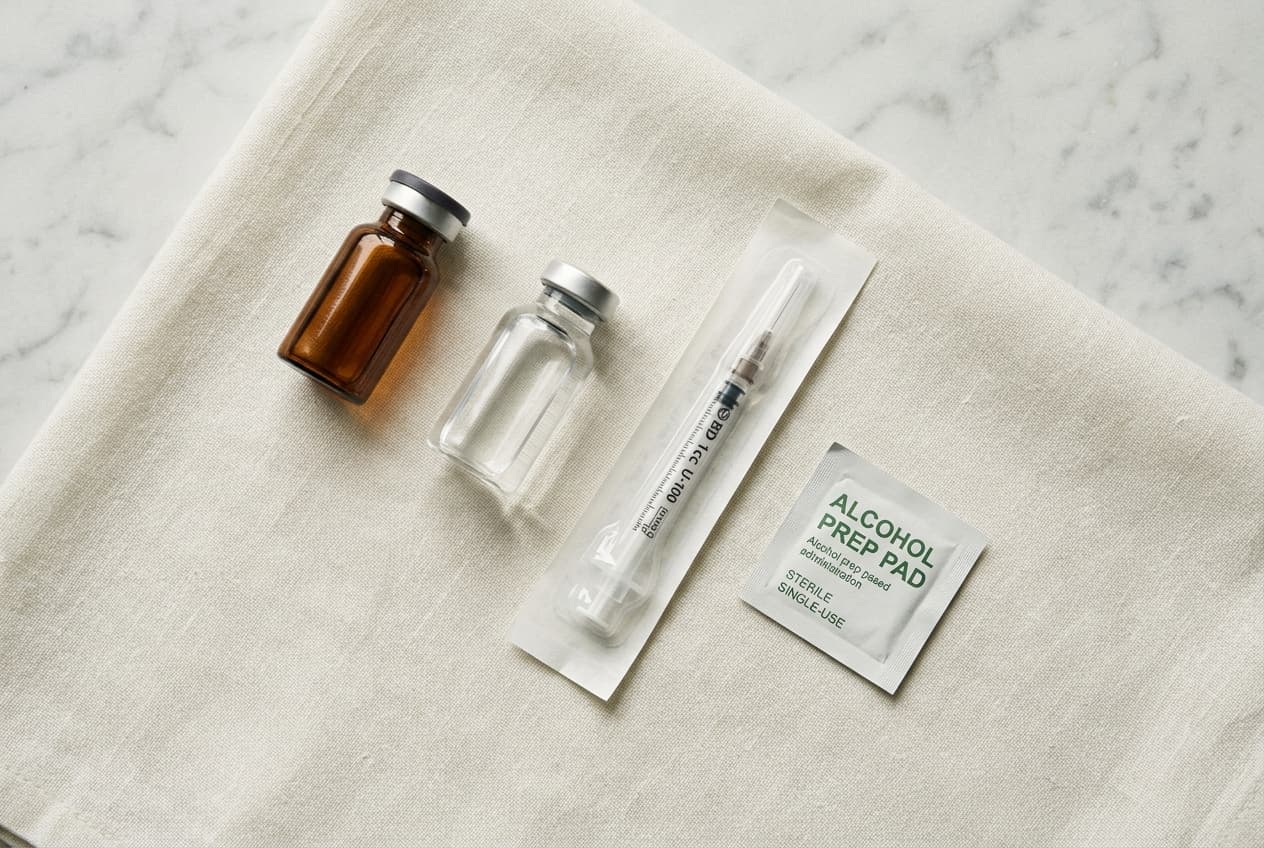
A 10 IU vial reconstituted with 1 ml bacteriostatic water gives 10 IU/ml, which makes a 2 IU dose 0.2 ml — 20 units on a U-100 insulin syringe. A 100 IU vial mixed with 1 ml gives 100 IU/ml, in which case 2 IU is 2 units on the syringe — tiny, easy to under- or over-shoot. Many users prefer the lower-concentration mix for that reason. Subcutaneous into the abdomen, AM fasted for fat-loss focus or pre-bed for sleep focus. Refrigerate after reconstitution; potency holds for about 3 weeks.
Open calculator pre-filledStorage after reconstitution
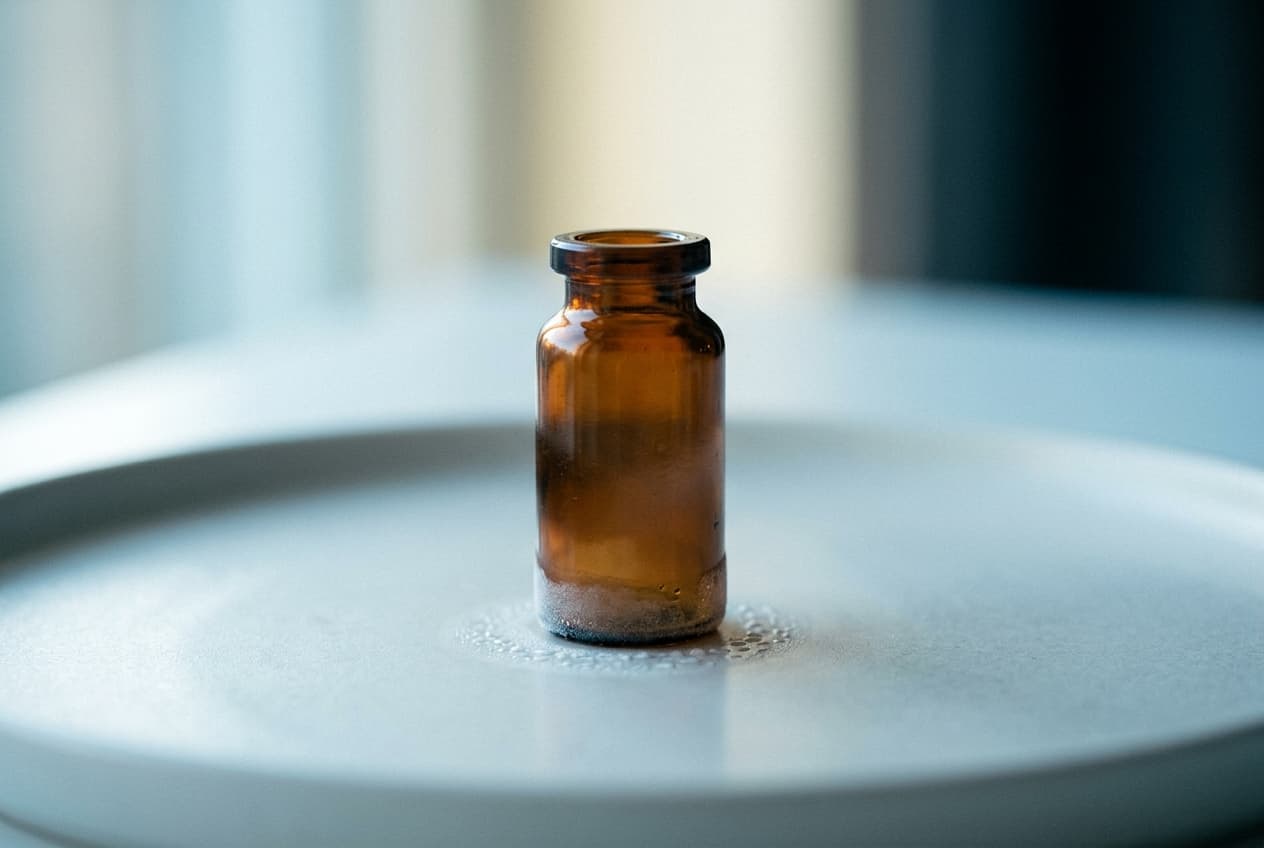
Refrigerate the reconstituted vial at 2–8 °C immediately. Do not freeze — freezing irreversibly destroys somatropin. Light-protect (the original Genotropin/Norditropin/Humatrope packaging is foil-lined for this reason). Reconstituted somatropin is stable for 14–21 days at fridge temperature; this is shorter than most peptides because the full-length protein degrades faster than smaller analogues. Travel: insulated pouch with ice pack, never in checked luggage (cargo holds can drop below freezing). Cold injection stings — pull from the fridge 15 minutes before injecting.
Common mistakes
Starting at the target dose instead of titrating up.
Better approach: Begin at 1 IU/day for the first week regardless of where you plan to land. Fluid retention and joint discomfort show up at the lower doses first and let you correct the trajectory before you are sitting on a vial half-used. Increase by 0.5 IU per week to your target.
Skipping glucose monitoring above 2 IU/day.
Better approach: Fasting glucose and HbA1c every 8 weeks at any dose at or above 2 IU/day. GH-induced insulin resistance is silent until it is not, and HbA1c trending up by 0.3 in 12 weeks is the early warning the lab catches and you will not.
Eating carbs or protein right around the injection.
Better approach: Insulin blunts the GH pulse. Keep a 30-minute window clear of food on either side of the shot. Black coffee and water are fine; everything else waits.
Stopping abruptly at the end of a cycle.
Better approach: Taper 0.5 IU/week down to zero. IGF-1 falls slowly; the few weeks of feeling flat after a hard stop are avoidable with a 2-week taper.
Real-world tips
- Buy a U-100 insulin syringe with half-unit markings. The dose precision matters more at low-volume / high-concentration mixes.
- Inject into the abdomen, rotate sites in a clock-face pattern. Same-spot repeats turn into local lipoatrophy over months.
- Track waist circumference weekly, not weight. The scale lies during the first month because of fluid; the waist tells the truth.
- If carpal tunnel tingling appears overnight, your dose is 0.5 IU too high. Drop, hold for two weeks, then reassess.
- Refrigerate the reconstituted vial. Room temperature is fine for a day or two but degrades from there.
When something else is the better tool
CJC-1295 / Ipamorelin stack
Use instead when: You want most of the GH benefit at a fraction of the side-effect risk and the cost. The secretagogue stack does not match HGH for raw IGF-1 elevation, but it preserves the pulsatile pattern and the safety margin is much friendlier for indefinite use.
Tesamorelin
Use instead when: Visceral fat is the specific goal. Tesamorelin is on-label for HIV-associated lipodystrophy and the trial data on visceral fat reduction is cleaner than the off-label HGH literature.
Sermorelin
Use instead when: You are older, sleep is the chief complaint, and you want the gentlest possible re-introduction of a GH signal. Sermorelin pulses the pituitary in line with the natural sleep-onset window without the metabolic baggage of full HGH.
- When should I inject?
- AM fasted maximises lipolysis; pre-bed supports sleep architecture. Try one for two weeks, then the other for two weeks, and pick the protocol that fits your routine. Splitting AM/PM at higher doses spreads the load but is not strictly necessary below 4 IU/day.
- How long until results?
- Sleep changes within two weeks. Visible body composition change around 8 weeks. The full effect of a cycle does not arrive until weeks 12–16, which is why short cycles get judged unfairly.
- Do I need glucose monitoring?
- Yes, at any dose of 2 IU/day or above. Fasting glucose and HbA1c every 8 weeks. The insulin resistance is real, dose-dependent, and silent until it shows up on labs.
- Will it shut down my natural GH?
- Exogenous GH does suppress pituitary output for the duration of the cycle and a few weeks after. A taper-down at the end gives the axis the gentlest re-entry; cold stops produce a few weeks of feeling flat that the taper avoids.
- Is the carpal tunnel permanent?
- No — it is fluid-driven and dose-responsive. Drop 0.5 IU and it resolves within a week or two. If it does not, you are at the dose where your tendons are talking to you about the pace.