NAD+
Also known as: NAD+ · Nicotinamide Adenine Dinucleotide
Technically a coenzyme rather than a peptide — central to energy metabolism, DNA repair, and sirtuin activity. Levels fall with age; injectable and IV protocols try to restore them.
Overview
NAD+ is in the catalogue because the longevity-clinic ecosystem has adopted it, not because it is a peptide. It is a coenzyme, and the marketing around it sits well ahead of the human evidence. Cellular NAD+ does drop with age, sirtuins do depend on it, and the mechanistic case for restoring it is reasonable. What is less reasonable is the leap from "cellular NAD+ matters" to "a 500 mg IV infusion fixes aging". IV protocols at clinics are anecdotal: many users report a clear energy and clarity bump on the day of infusion, but controlled trials are absent. Oral precursors (NR, NMN) have better-developed human pharmacokinetic and pilot data, but their downstream clinical benefits remain modest in the trials that exist.
Evidence quality
Injectable and IV NAD+ have essentially no controlled trial data — the use case is built on mechanism plus anecdote. Oral precursors (NR and NMN) have a better-developed picture: published Phase 1 and 2 studies show they raise blood NAD+ levels reliably, but downstream clinical outcomes (physical function, biomarkers of aging) are mixed and small. The IV protocols popular in wellness clinics are pharmacologically interesting but not supported by trial-level evidence.
Benefits & timeline
Benefits
- Many users report a notable energy and mental clarity bump on the day of injection or infusion — subjective but consistent
- Supports sirtuin activity and DNA-repair pathways, which is the mechanistic case for the longevity framing
- Used adjunctively in addiction recovery clinics with reported reduction in withdrawal severity (anecdotal, popular in IV protocols)
- Mitochondrial function support — the coenzyme role is real even if the supplementation effect on aging is unproven
Timeline
Day 1
Most users feel an immediate, sometimes "buzzy" energy lift from the injection, peaking within hours.
Week 1–2
Cumulative energy improvement settles in. Sleep quality often shifts as well, occasionally for worse if dosed late.
Week 4–6
Plateau. If you are going to feel a sustained benefit, it has emerged by here.
Week 8–12
End of cycle. 4 weeks off lets you assess whether anything held without ongoing dosing.
Dosage protocols
Advanced
250 mg
three times weekly
IV infusion sometimes used at clinics; SC injection is the at-home form.
Beginner
50 mg
twice weekly
Standard
100 mg
twice weekly
Titration & adjustment
Inject SLOWLY — fast injection causes severe flushing and chest tightness. Start at 50 mg subcutaneously twice weekly. After 2 weeks escalate to 100 mg twice weekly. Maximum 250 mg three times weekly. If flushing occurs, dilute further (e.g. add 1 ml saline) and inject over 30+ seconds.
Injection timing

Subcutaneous, mornings preferred (the energy boost can disrupt evening sleep). INJECT SLOWLY (over 30–60 seconds) to avoid the flushing reaction. 2–3× weekly is the standard cadence.
Side effects & contraindications

- moderateFlushing and chest tightness during fast administration. This is the single most common complaint and it is genuinely uncomfortable. Inject slowly.
- mildNausea during or shortly after injection.
- mildInjection-site irritation, more common than with most peptides because of the volume and pH.
- mildSleep disturbance if dosed in the evening — NAD+ is energising for most users.
- moderateIV infusions at clinics carry the usual IV risks (line infection, infiltration) on top of the pharmacological ones.
Contraindications
- Active cancer — theoretical concern that NAD+ supports rapidly dividing tissue including tumour cells; the human data here is genuinely uncertain
- Pregnancy and breastfeeding
- Severe cardiovascular disease — the flushing response involves real vasodilation
- Concurrent niacin or nicotinamide supplementation — overlapping pathway, additive flushing
Reconstitution & injection
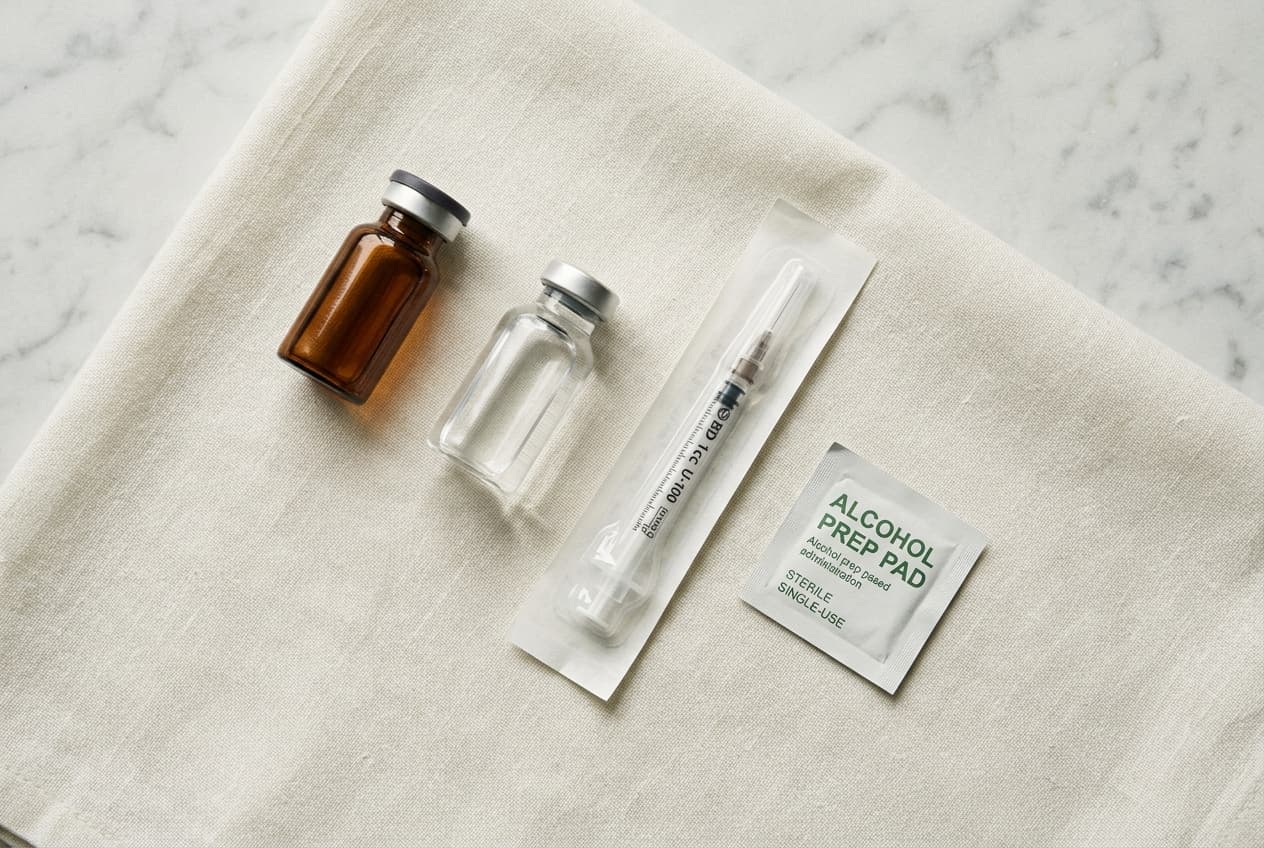
A 500 mg vial mixed with 5 ml bacteriostatic water gives 100 mg per ml. A 100 mg dose is 1 ml — too much for an insulin syringe, so use a 3 ml syringe with a 27–30 G needle. Subcutaneous, abdomen or thigh, twice weekly. Inject slowly, over 30–60 seconds at minimum. If flushing happens, dilute the next dose further (add another ml of saline) and slow the push. IV infusions are clinic-only and an entirely different protocol.
Open calculator pre-filledStorage after reconstitution
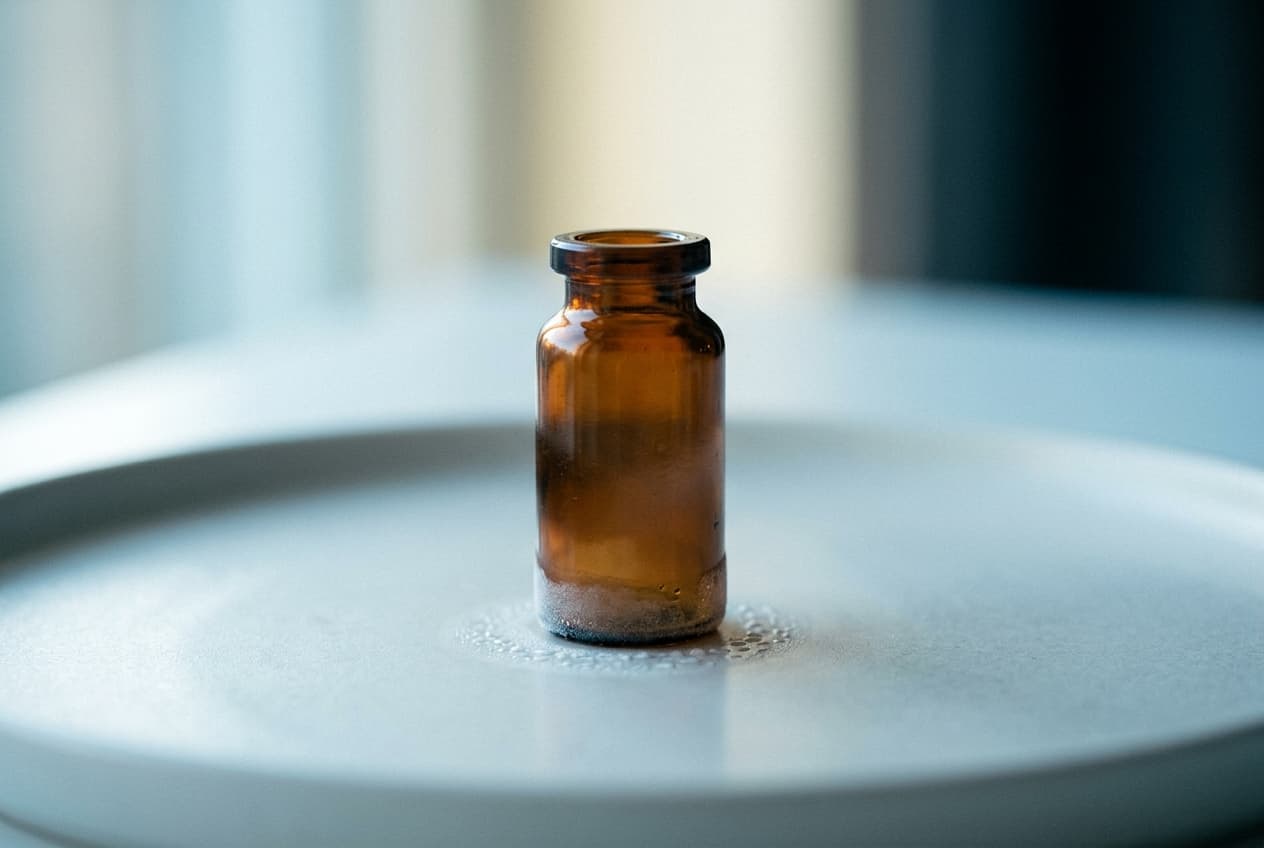
Refrigerate at 2–8 °C after reconstitution. Do not freeze. STRICTLY light-protected — NAD+ is photosensitive and will degrade visibly (the solution darkens) when left in light. Wrap the vial in foil or store in an opaque bag inside the fridge. Stable 28–30 days at fridge temperature when light is fully excluded; potency drops noticeably if exposed to ambient light for hours. A solution that has turned brown/amber should be discarded.
Common mistakes
Pushing the injection fast to get it over with.
Better approach: Fast push triggers the flushing reflex and produces real chest discomfort. Slow the injection to at least 30 seconds, longer if you are sensitive. If flushing happens anyway, dilute the next dose with extra saline.
Spending thousands on weekly IV infusions when oral NR or NMN would do most of the same job.
Better approach: Oral NR raises blood NAD+ reliably and at a fraction of the cost. The IV experience has the dramatic same-day buzz, but the cumulative biology is similar. Run NR for 8 weeks and see what you actually get before committing to an infusion habit.
Dosing in the evening.
Better approach: NAD+ is energising. Late dosing wrecks sleep onset for most users. Morning is the rule unless you have personally tested otherwise.
Treating it as the entire longevity stack.
Better approach: NAD+ is one input. Sleep, training, diet, and not smoking will outperform the most aggressive NAD+ protocol. If your sleep is broken, fix that first; NAD+ on top of broken sleep does very little.
Real-world tips
- Always inject slowly. The first session is the one where you learn your personal flushing threshold.
- Morning injection, with food. The buzz is real and unpleasant on an empty stomach for some users.
- If you flush despite slow injection, add 1 ml of bacteriostatic saline to the syringe to dilute and push over 60 seconds.
- Track sleep alongside energy. The energy bump can mask sleep degradation for a few weeks before the cumulative cost shows up.
- Consider running oral NMN or NR first. Cheaper, no needles, and the response tells you whether your NAD+ system is even what is limiting you.
When something else is the better tool
Oral NR (nicotinamide riboside) or NMN
Use instead when: You want the same biology with better human evidence, no flushing, no needles, and a lower cost. The trade-off is no dramatic same-day buzz, which is honestly fine — the chronic effect is what matters.
IV NAD+ infusions at a clinic
Use instead when: You want the most aggressive plasma exposure and are happy paying for the experience and the monitoring. The use case is short (a single infusion before a high-stakes event) or remedial (addiction recovery). Long-term weekly IVs are expensive theatre.
MOTS-c
Use instead when: You want mitochondrial-level support with a more peptide-like protocol and a slightly better human evidence base for metabolic endpoints. The mechanism is upstream of where NAD+ acts and the use case is more training-adjacent.
- Why does the injection feel so weird?
- NAD+ triggers vasodilation when delivered fast. The chest tightness, flushing, and "crawling skin" sensation is the body responding to the bolus. Slow injection blunts most of it.
- Is IV really better than subcut?
- Plasma levels rise faster and higher with IV — that is real. Whether that translates to a bigger clinical effect is not established. The subcut at-home protocol gets most of the chronic exposure for a tenth of the cost.
- How is this different from taking niacin?
- Niacin is a precursor that the body converts. NAD+ injection delivers the coenzyme directly. Niacin causes its own famous flushing through a different mechanism (prostaglandins). Both raise NAD+ levels; the path is different.
- Does it actually slow aging?
- There is no human evidence that it does. There is evidence that NAD+ levels fall with age and that the coenzyme matters for processes implicated in aging. The leap from those facts to "NAD+ supplementation extends lifespan in humans" is one the data has not made yet.
- Can I run it indefinitely?
- There is no long-term human safety data on chronic injectable use. Cycling 8–12 weeks on, 4 weeks off is the conventional rhythm. Whether continuous dosing is safe is genuinely unknown.