
Retatrutide
Also known as: LY3437943
Triple agonist hitting GIP, GLP-1, and glucagon receptors at once. Phase 2 data shows the largest weight-loss numbers ever reported for a drug in trials — ~24% at 48 weeks.
Overview
Retatrutide (Eli Lilly's LY3437943) is the next-generation incretin: the GIP and GLP-1 arms do what Tirzepatide does, and the third arm activates glucagon receptors to raise resting energy expenditure. Where GLP-1 alone shrinks intake, glucagon also pushes output, which is why the trial numbers come in higher. The 2023 NEJM Phase 2 paper reported about 24% body-weight reduction at 12 mg over 48 weeks, with the curve still trending down at the endpoint. Phase 3 (TRIUMPH) is ongoing as of 2026, with no approval yet. The trade-off is heart rate: the glucagon arm raises resting HR by 5–10 bpm in most users, and tolerability is roughly proportional to the potency.
Evidence quality
Phase 2 results published in NEJM 2023 showed ~24% weight loss at 12 mg over 48 weeks. The TRIUMPH Phase 3 programme (TRIUMPH-1 through TRIUMPH-4) is enrolling and reporting through 2025–2026, covering obesity, type 2 diabetes, obstructive sleep apnoea, and knee osteoarthritis. No regulatory approval as of mid-2026. The dataset is strong but not yet at the size or duration where rare safety signals would surface.
Benefits & timeline
Benefits
- Phase 2 weight loss of ~24% at 12 mg over 48 weeks — substantially larger than any approved drug
- The curve had not plateaued at 48 weeks, suggesting longer trials may show more
- Glucagon arm raises resting energy expenditure, partially offsetting metabolic adaptation to dieting
- Effective in users who have plateaued on Tirzepatide or maxed out Semaglutide
Timeline
Week 1–4
2 mg starter dose. Appetite suppression appears, nausea common.
Week 8–12
Climbing through 4 mg toward 8 mg. Weight loss accelerates; resting heart rate often ticks up 5–10 bpm.
Week 16–24
On 8–12 mg for users escalating fully. Most rapid weight loss of any incretin protocol in this catalogue.
Week 36–48
Phase 2 endpoint zone. Loss continues; some users still trending downward without plateau.
Dosage protocols

Advanced
12 mg
once weekly
Phase 2 trial maximum dose. Investigational.
Beginner
2 mg
once weekly
Standard
8 mg
once weekly
Titration & adjustment
Investigational; only published titration is from the Phase 2 trial. Start at 2 mg weekly for 4 weeks, then 4 mg for 4 weeks, then 8 mg for 4 weeks. Escalate to 12 mg only if 8 mg is well tolerated. Heart rate often rises ~5–10 bpm at higher doses — measure resting HR weekly and pause escalation if it climbs above 100 bpm. To stop: taper as you would Tirzepatide (one step every 2 weeks).
Injection timing

Once weekly on a fixed weekday, morning preferred. Because the glucagon arm slightly raises resting heart rate, avoid heavy stimulant intake (high-caffeine pre-workout, etc.) for 24 hours after the injection.
Side effects & contraindications

- moderateNausea and vomiting during titration — similar to Tirzepatide, sometimes worse at the top doses.
- moderateResting heart rate increase of 5–10 bpm at higher doses. Routinely monitor if you start above baseline tachycardia.
- moderateIncreased lean-mass loss risk because the speed of weight loss outpaces what most people's training can defend.
- severeLong-term safety profile is not yet established outside of trials. Phase 3 outcomes data has not been published.
- mildMild jitteriness or anxiety from the glucagon arm in sensitive users.
Contraindications
- Resting heart rate above 100 bpm or any uncontrolled cardiac arrhythmia
- Personal or family history of medullary thyroid carcinoma — same incretin-class concern
- Active or recent pancreatitis
- Pregnancy or active conception attempts
- Severe hepatic impairment — glucagon signalling acts on the liver and is being formally studied for safety in this group
Reconstitution & injection
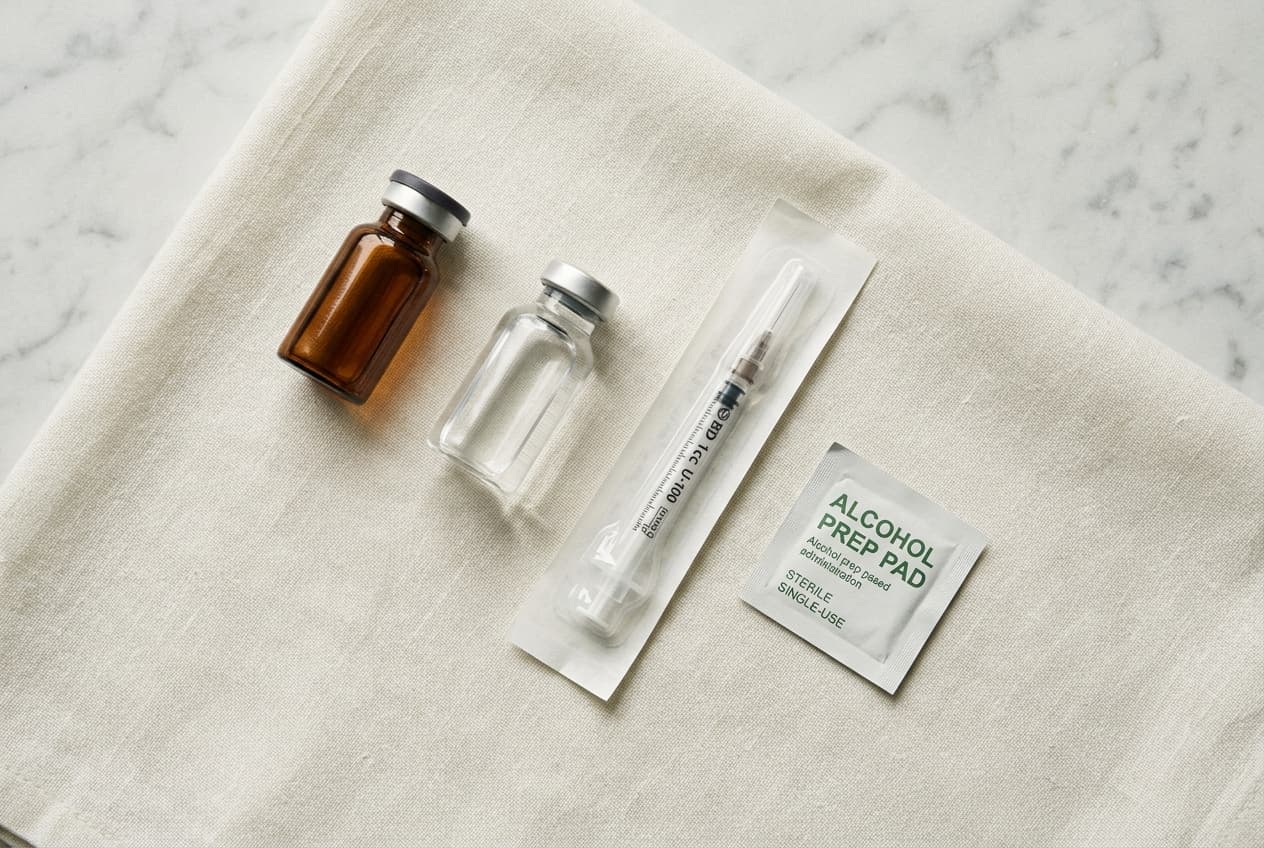
Research-grade comes as 10 mg lyophilised vials. Reconstitute with 2 ml bacteriostatic water for 5 mg/ml — a 2 mg starter dose draws 0.4 ml, or 40 units on a U-100 insulin syringe; 12 mg requires 2.4 ml total, so split across two injection sites or dose from a larger reconstitution. Subcutaneous, once weekly, abdomen or thigh, rotating sites. No retail product exists yet; everything available is research-grade only.
Open calculator pre-filledStorage after reconstitution
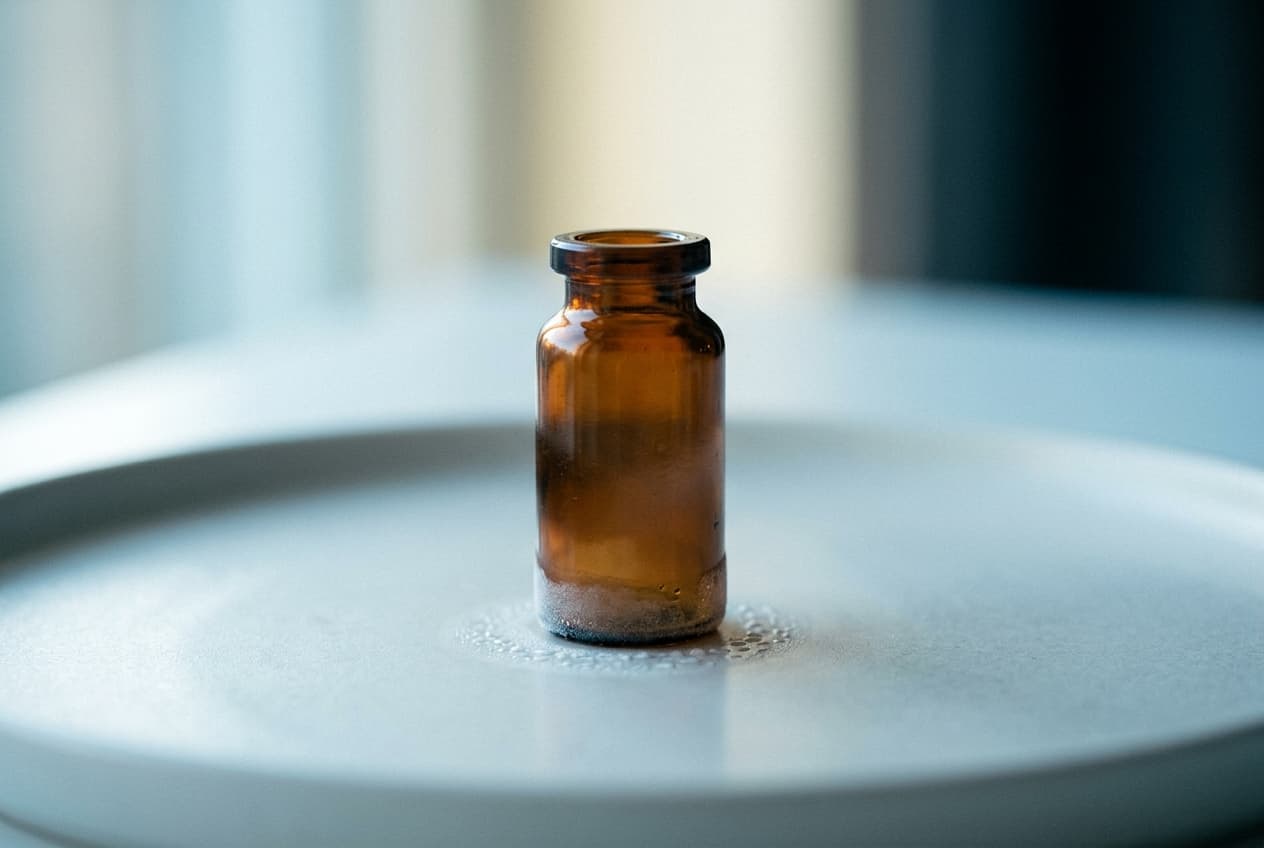
Refrigerate at 2–8 °C right after reconstitution. Do not freeze. Light-protect the vial (original packaging or a small opaque bag). Stable for 28 days at fridge temperature in BAC water. The Phase 2 trial preparations were similarly handled. Inspect before every injection — solution must be clear and colourless. The higher doses require larger draws, so plan reconstitution volume to finish a vial inside the 4-week window rather than diluting too sparsely and letting solution sit.
Common mistakes
Treating it as 'just stronger Tirzepatide' and using the same titration speed.
Better approach: The glucagon arm adds a heart rate signal that is not present with Tirzepatide. Measure resting HR weekly (a smart watch or 60 seconds with a stopwatch is fine) and hold dose escalation if it climbs above 100 bpm or rises more than 15 bpm from baseline. The trial titration is conservative for a reason.
Skipping protein and training because the weight is dropping fast.
Better approach: Lean-mass loss scales with the speed of weight loss, and Retatrutide loses weight fast. Set 1.8–2.2 g of protein per kg of target body weight and lift heavy three times a week. Without that, you are buying body recomposition you will pay back when the drug stops.
Sourcing research-grade material without verifying purity.
Better approach: There is no approved Retatrutide. Every vial you can buy outside a clinical trial is research-grade and quality varies sharply. Request a current third-party HPLC assay from the supplier and reject anything that cannot produce one. The cost of a counterfeit is not just wasted money — it can be a different molecule entirely.
Pushing to 12 mg because the Phase 2 paper used it.
Better approach: The 8 mg group in the Phase 2 trial lost almost as much as the 12 mg group, with better tolerability. If 8 mg is delivering steady loss, there is no good reason to climb further. The top dose is a ceiling, not a goal.
Real-world tips
- Track resting heart rate every morning at the same time. The glucagon arm is the variable other incretins do not have.
- Avoid stimulant-heavy pre-workouts for at least 24 hours after each injection. Combined with the glucagon HR signal, you can get into uncomfortable territory.
- Inject in the evening on a non-training day. The HR rise overlaps less with exercise and gives you a full night of low-activity adaptation.
- Body recomposition becomes visible faster than on any other incretin. Photograph monthly under consistent lighting — the scale undersells what is happening.
- Lean into resistance training rather than cardio during the loss phase. The glucagon arm already pushes energy expenditure; you do not need to add zone-2 hours on top.
When something else is the better tool
Tirzepatide
Use instead when: You want an approved drug with insurance pathways and the larger safety database. Tirzepatide delivers ~21% at top dose; Retatrutide delivers ~24%. The marginal 3 percentage points matters less than the regulatory and supply-chain confidence for most people.
Survodutide
Use instead when: You want a GLP-1/glucagon co-agonist without the GIP arm — Boehringer's investigational compound. The clinical profile is broadly similar to Retatrutide minus the GIP receptor. Choose by supply availability and trial data preference.
Tirzepatide plus a stable lifestyle plan
Use instead when: You have not yet maximised the simpler tool. Stepping up to a triple agonist before you have run Tirzepatide to its endpoint is solving a problem you have not proven exists.
- When will it be approved?
- Eli Lilly's TRIUMPH Phase 3 programme is reporting through 2025–2026. FDA approval, if the data holds, is plausible in 2027. That is a regulatory estimate, not a promise.
- Is the weight loss really larger than Tirzepatide?
- On paper, by roughly 3 percentage points of body weight at the maximum studied doses. In practice, the gap is biggest in users with significant adaptation to GLP-1 / GIP signalling already. For someone naive to incretins, the difference is smaller than the headlines suggest.
- How worried should I be about the heart rate increase?
- A 5–10 bpm rise is meaningful but not dangerous in healthy people. If you have pre-existing tachycardia, atrial fibrillation, or uncontrolled hypertension, this is the wrong drug to experiment with. Otherwise, monitor weekly and treat persistent elevation above 100 bpm as a signal to pause.
- Where does the trial data come from?
- Eli Lilly is the sponsor; the Phase 2 paper is in NEJM 2023. The Phase 3 TRIUMPH programme is registered on ClinicalTrials.gov. There is no independent academic-group dataset of meaningful size yet.
- Can I cycle it the way people cycle BPC-157?
- No reason to. Receptor desensitisation is not a meaningful issue with incretins at clinical doses. Stay on it for as long as it is working and you are tolerating it.