
Semaglutide
Also known as: Ozempic · Wegovy · Rybelsus
The GLP-1 receptor agonist that turned obesity pharmacology into a mainstream conversation. Once-weekly injection, ~7-day half-life, and the largest randomised dataset of anything in this catalogue.
Overview
Semaglutide mimics glucagon-like peptide-1, a gut hormone that tells the pancreas to release insulin, slows gastric emptying, and signals the hypothalamus to stop being hungry. The STEP and SUSTAIN trial programmes are why every other peptide on this page gets benchmarked against it: 15% body-weight loss at 2.4 mg over 68 weeks (STEP 1), durable HbA1c reductions in type 2 diabetics, and a cardiovascular signal solid enough that the FDA approved Wegovy for MACE risk reduction in 2024. The catch is the same one that applies to every appetite-suppressing drug: stop the injections and most of the weight comes back, because the underlying physiology has not been retrained.
Evidence quality
Approved by the FDA and EMA for type 2 diabetes (Ozempic, Rybelsus oral) and chronic weight management (Wegovy). The STEP 1–8 obesity trials and the SUSTAIN diabetes programme together represent tens of thousands of randomised patient-years. SELECT (2023) added cardiovascular outcomes — a 20% reduction in MACE in patients with obesity and established CVD. This is the most thoroughly characterised peptide on this site by an order of magnitude.
Benefits & timeline
Benefits
- Steady appetite reduction that begins within the first two weeks and deepens through titration
- 10–15% body-weight loss in obesity trials at the 2.4 mg dose; closer to 6–8% at the 1.0 mg diabetes dose
- Meaningful HbA1c drops (1–2 percentage points) in type 2 diabetics on top of the weight effect
- A growing literature on reduced cravings beyond food — alcohol, nicotine, and compulsive behaviours have shown up as secondary findings
Timeline
Week 1–2
Hunger noticeably quieter; nausea common on titration day, fading within 48 hours.
Week 4
Most users have dropped 1–3 kg and are titrating from 0.25 to 0.5 mg.
Week 8–12
Loss accelerates as you climb to 1.0 mg and beyond. Portion sizes shrink without conscious effort.
Week 16–24
Approaching target dose (1.7 or 2.4 mg). Weekly losses slow but compound.
Week 52+
Plateau zone. STEP 4 showed weight returns rapidly without continued dosing — plan a maintenance strategy, not an exit.
Dosage protocols

Advanced
2.4 mg
once weekly
Maximum approved obesity dose.
Beginner
0.25 mg
once weekly
Titration dose to assess tolerance.
Standard
1 mg
once weekly
Step up: 0.25 → 0.5 → 1.0 mg over 8 weeks.
Titration & adjustment
Start at 0.25 mg once weekly for 4 weeks. Escalate to 0.5 mg weekly for 4 weeks, then 1.0 mg weekly for 4 weeks. Further escalation to 1.7 mg and 2.4 mg is in 4-week steps. If you experience persistent nausea, delay the next escalation by 2–4 weeks at the current dose. Never increase faster than every 4 weeks. To come off: taper down in 0.5 mg steps every 2 weeks to reduce appetite rebound. Pause escalation if you cannot eat enough protein.
Injection timing

Once-weekly injection on the same day each week. Time of day does not matter pharmacokinetically, but most users dose in the morning so any nausea peaks during waking hours. Take with or without food. If you miss a dose by less than 5 days, inject as soon as you remember and resume your normal day. If more than 5 days, skip and resume on your usual day.
Side effects & contraindications

- moderateNausea is the dominant complaint, worst in the 24–48 hours after each escalation step.
- mildConstipation or diarrhoea, often alternating. Hydration and fibre help more than people expect.
- mildFatigue and low mood during the first month — partly the calorie deficit, partly the drug itself.
- moderateLean-mass loss is real. Roughly a third of total weight lost is non-fat tissue without resistance training to defend it.
- severeRare but documented: pancreatitis (persistent radiating abdominal pain is a stop-and-call signal) and gallbladder events on rapid weight loss.
Contraindications
- Personal or family history of medullary thyroid carcinoma or MEN-2 syndrome — the black-box warning is based on rodent C-cell tumours; the human signal is not zero
- Active pancreatitis or recent gallbladder disease
- Pregnancy, breastfeeding, or active conception attempts — washout is at least 2 months because of the long half-life
- Severe gastroparesis — Semaglutide makes a slow stomach slower
- Type 1 diabetes outside research protocols — it is not insulin and does not replace it
Reconstitution & injection
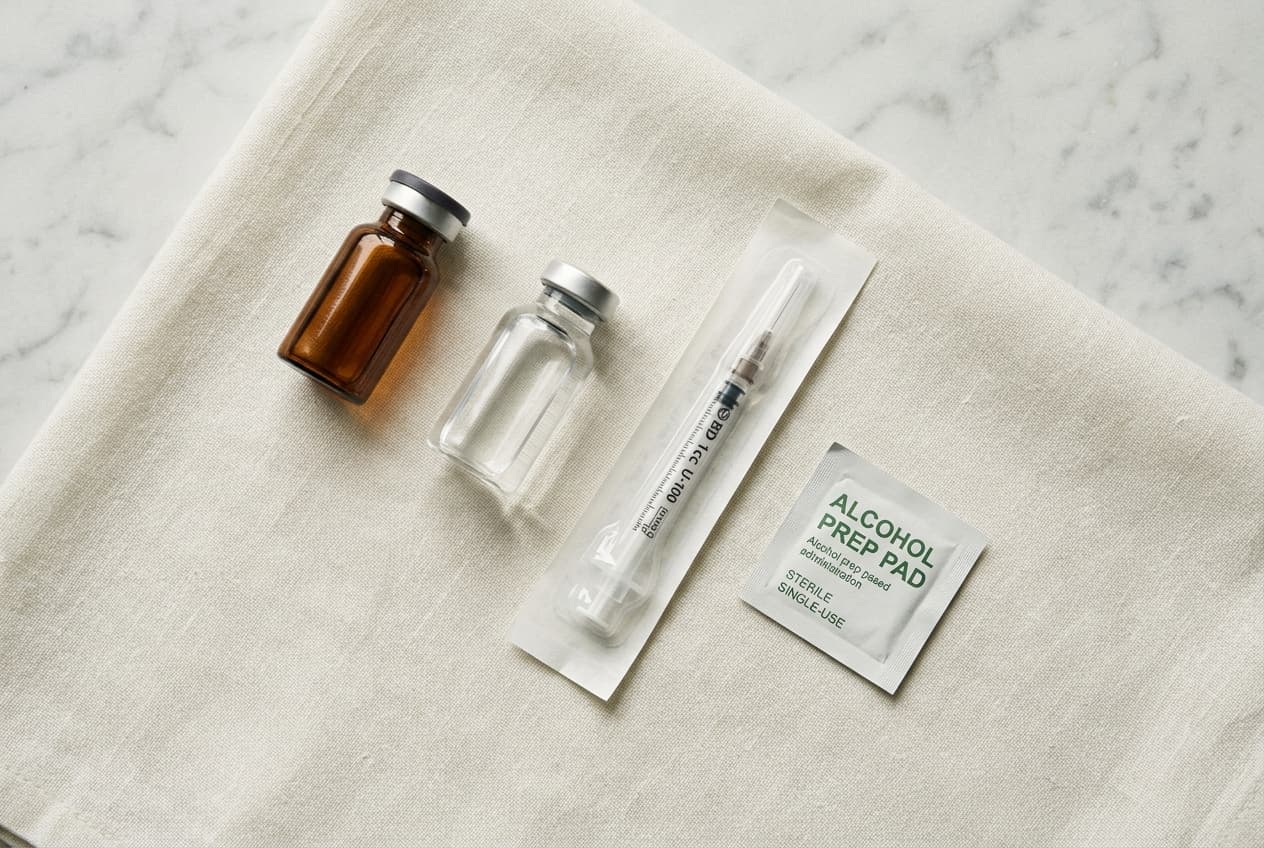
Retail pens (Ozempic, Wegovy) ship pre-filled and you only dial the dose. For research-grade lyophilised vials, a 5 mg vial reconstituted with 2 ml bacteriostatic water gives 2.5 mg/ml — a 0.25 mg starting dose is 0.1 ml, or 10 units on a U-100 insulin syringe. Inject subcutaneously into the abdomen at least 5 cm from the navel, the outer thigh, or the back of the upper arm. Rotate sites weekly to avoid lipohypertrophy. Once reconstituted, fridge storage keeps potency for at least 4 weeks.
Open calculator pre-filledStorage after reconstitution
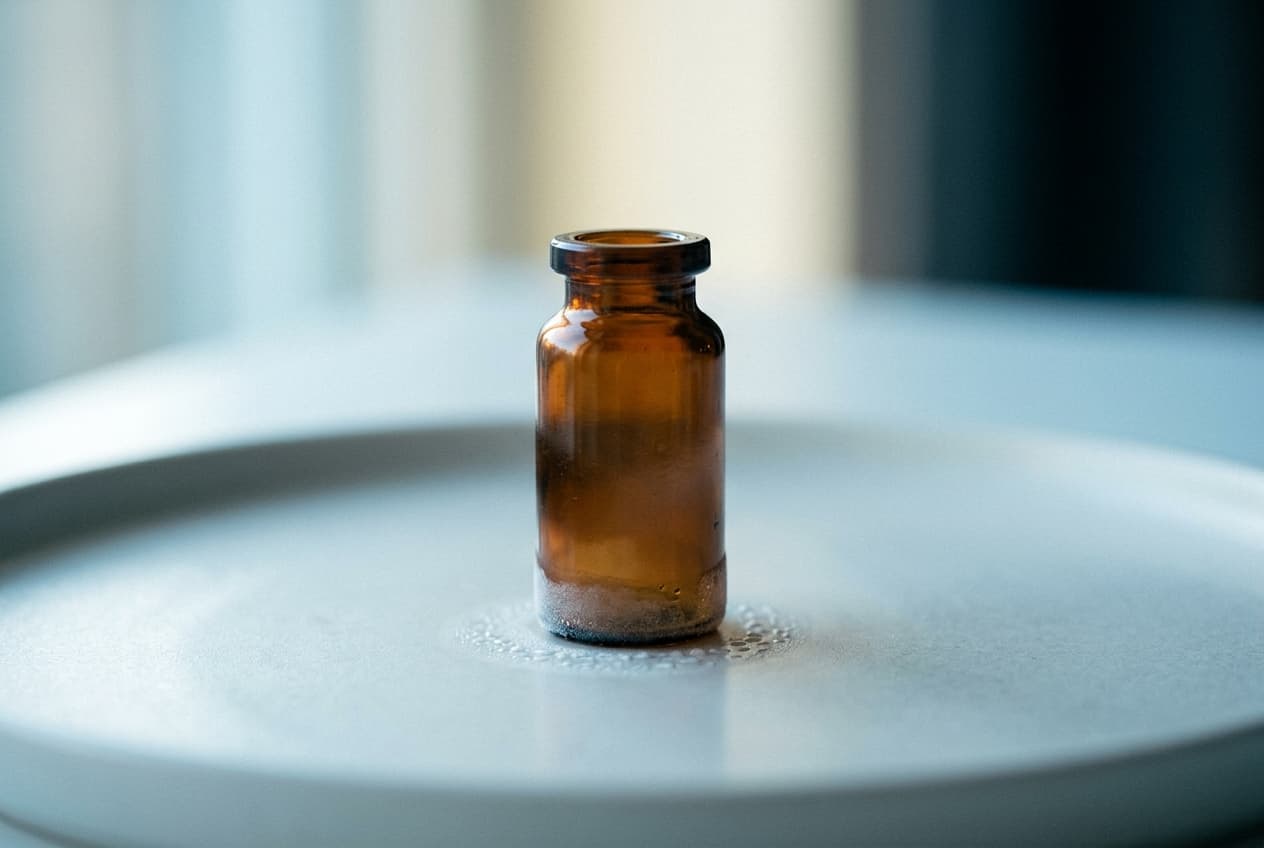
Refrigerate immediately after reconstitution at 2–8 °C. Do not freeze — freezing irreversibly denatures the peptide. Keep the vial in the original carton or wrap with foil to protect from light. Reconstituted potency holds for at least 4 weeks (28 days) at fridge temperature. Travel: an insulated pouch with an ice pack keeps potency for up to 12 hours; if you must skip refrigeration once, the vial is still usable but discard if more than 24 hours have passed at room temperature. Visual check before each dose: the solution should be clear and colourless. Cloudiness, particulates, or a colour shift means discard.
Common mistakes
Rushing the titration to chase faster weight loss.
Better approach: The titration schedule exists to let the gut acclimate. Jumping from 0.25 mg to 1.0 mg in three weeks instead of twelve buys nothing except a higher chance of vomiting badly enough to skip a dose, which sets you back further than the patient escalation would have. Hold whatever step is causing GI distress for an extra 4 weeks rather than push through.
Ignoring protein and resistance training during the weight loss.
Better approach: Appetite suppression makes it easy to undereat protein. Aim for 1.6–2.2 g per kg of target body weight per day and lift heavy 2–3 times a week. Without that, a meaningful fraction of the scale loss is lean tissue, which lowers maintenance calories and makes the rebound worse.
Treating it as a 6-month intervention rather than a chronic medication.
Better approach: STEP 4 showed two-thirds of lost weight returning within a year of stopping. Decide upfront whether you are doing a finite course (then need an aggressive lifestyle/maintenance plan) or staying on a lower maintenance dose indefinitely. Both are legitimate; the dishonest answer is pretending the choice does not exist.
Stacking with high-calorie liquid foods to 'meet protein goals'.
Better approach: Blended shakes bypass the satiety signal Semaglutide is generating. You can drink 800 calories without registering them, which sabotages the deficit. Keep protein solid where possible — eggs, lean meat, Greek yoghurt, cottage cheese — and treat shakes as a backup, not a primary tactic.
Real-world tips
- Inject at the same time on the same weekday. The 7-day half-life is forgiving, but routine prevents the missed-dose ambiguity.
- Keep ondansetron or a generic anti-emetic available for the first month. One bad nausea night is enough to make people quit a working protocol.
- Cold injections sting. Take the pen out of the fridge 20 minutes before use.
- Weigh weekly, not daily. The slow rate of true loss is invisible underneath day-to-day water swings.
- Track waist circumference monthly. It often moves faster than the scale once visceral fat starts dropping.
- If you travel across time zones, dose on local time at the destination. The 7-day half-life means a 12-hour shift is irrelevant.
When something else is the better tool
Tirzepatide
Use instead when: You want stronger weight-loss effect and can tolerate slightly more nausea. SURMOUNT-1 vs STEP 1 puts Tirzepatide ahead by roughly 5–7 percentage points of body weight at the top dose. If cost is similar, Tirzepatide is the more potent tool.
CagriSema
Use instead when: You have plateaued on Semaglutide alone and want to add an amylin signal rather than just escalating GLP-1. The combination produces meaningful additional loss in users whose Semaglutide curve has flattened.
Lifestyle alone for the first 10%
Use instead when: BMI is in the lower 30s and you have not yet attempted a structured 6-month nutrition and training programme. The drug works as well or better when it is layered onto a real diet protocol rather than replacing one.
- Will I keep the weight off after stopping?
- Probably not without a deliberate plan. STEP 4 randomised users to continued treatment or placebo after 20 weeks of titration; the continued group kept losing, the placebo group regained two-thirds within a year. Treat the question as 'what is my maintenance protocol' rather than 'when do I stop'.
- Does it really reduce alcohol cravings?
- It seems to for some people. Secondary endpoints in several trials show reduced alcohol intake, and a growing post-hoc literature describes the effect. The mechanism is plausible (GLP-1 receptors in reward pathways) but this is not yet an approved indication.
- Can I drink while on it?
- Yes, but tolerance often drops and a single drink can sit heavily because of slowed gastric emptying. Many users naturally drink less without trying.
- How do I handle the food I bought before the appetite vanished?
- Cook smaller portions and freeze the rest. The 'eyes bigger than stomach' problem gets dramatic in the first month; you will throw food away if you keep plating normal-sized meals.
- Is the compounded version equivalent to Ozempic?
- If sourced from a reputable compounder it is the same molecule, but quality control varies sharply. Branded pens are tested per batch; compounded vials are not always. Treat purity and sterility as the variables you cannot directly verify.