SLU-PP-332
Also known as: SLU-PP-332
A small-molecule pan-agonist of estrogen-related receptors (ERR alpha/beta/gamma) developed academically. In mice, it produces exercise-like adaptations and meaningful fat loss. In humans, there is zero clinical data. Treat it as the experimental tool it actually is.
Overview
SLU-PP-332 came out of a Saint Louis University group's work on the ERR family of nuclear receptors. The 2023 Nature Communications paper showed that dosing it into mice triggered mitochondrial biogenesis in skeletal muscle, raised endurance capacity, and reduced fat mass in diet-induced obese animals without changing food intake. The media wrote it up as an exercise pill. The actual situation is a single research compound, a small number of academic groups working on it, no IND filings in public registries, and a grey-market industry that started selling it within weeks of the paper hitting the press. The mechanism is interesting and the mouse data is real. Anyone telling you what dose to use in humans is extrapolating from rodent allometry, full stop.
Evidence quality
The foundational paper is Billon et al., Nature Communications 2023, from the Burris lab at Saint Louis University. Additional work has come from the same group and a handful of collaborators. There are zero registered human clinical trials of SLU-PP-332 as of this writing. The mechanism (pan-ERR agonism producing mitochondrial biogenesis) is well-validated in cell and rodent models. Whether the same effect appears in humans, at what dose, with what safety margin, is genuinely unknown.
Benefits & timeline
Benefits
- Strong rodent data for mitochondrial biogenesis and oxidative-fibre conversion in skeletal muscle - the cleanest exercise-mimetic mechanism published to date
- Reduced fat mass in obese mice without appetite suppression, suggesting an energy-expenditure rather than intake mechanism
- Improved endurance capacity in mouse running-wheel and treadmill assays
- Mechanistically distinct from GLP-1 incretins, which means in principle it could complement them - but there is zero human stack data to lean on
Timeline
Week 1-4
No reliable human pharmacokinetic data exists. Whatever you feel is either novelty effect or you are dosing wrong for human physiology.
Week 8
In mice, peak adaptations land here. In humans, this is purely a guess.
Week 12
If you are running it this long, you are gambling on a compound with no chronic-toxicology data in humans.
Off-cycle
Long off-cycle. There is no safety data justifying continuous use. Months of pause between any repeat is the cautious pattern.
Dosage protocols
Advanced
4 mg
daily
Investigational; preclinical data only.
Beginner
1 mg
daily
Standard
2 mg
daily
Titration & adjustment
No human titration data exists. Animal-derived starting estimates suggest 1 mg/day for 2 weeks, then assess subjective tolerance before increasing. Given the lack of safety data, the prudent approach is to stay at the lowest dose that produces a measurable effect and cycle off after 8–12 weeks.
Injection timing

No human data on optimal timing — extrapolating from animal studies, dosing pre-workout amplifies the exercise-mimetic effect. Do not dose late evening: the energetic effect can disrupt sleep.
Side effects & contraindications

- severeNo human safety data of any kind. You are the trial. There is no published profile of what dose causes what problem in humans.
- moderateTheoretical cardiac concern - ERR-gamma activation in cardiac tissue affects metabolism in ways that have not been characterised under chronic agonism in primates.
- moderateTheoretical hepatic concern - ERR receptors are expressed in liver and the chronic effect of pan-agonism on hepatic metabolism in humans is unknown.
- mildInjection-site reaction in users who reconstitute and inject. The molecule was studied in rodents via oral gavage; the subcutaneous route in humans is improvised.
Contraindications
- Pregnancy or breastfeeding - obvious, no data
- Cardiovascular disease - the cardiac ERR-gamma role is not characterised under chronic agonism
- Active cancer - nuclear receptor pan-agonism in a tumour-permissive environment is the exact wrong direction
- Anyone who is not comfortable being an N-of-1 experiment on themselves - the honest contraindication that no other vendor will write down for you
Reconstitution & injection
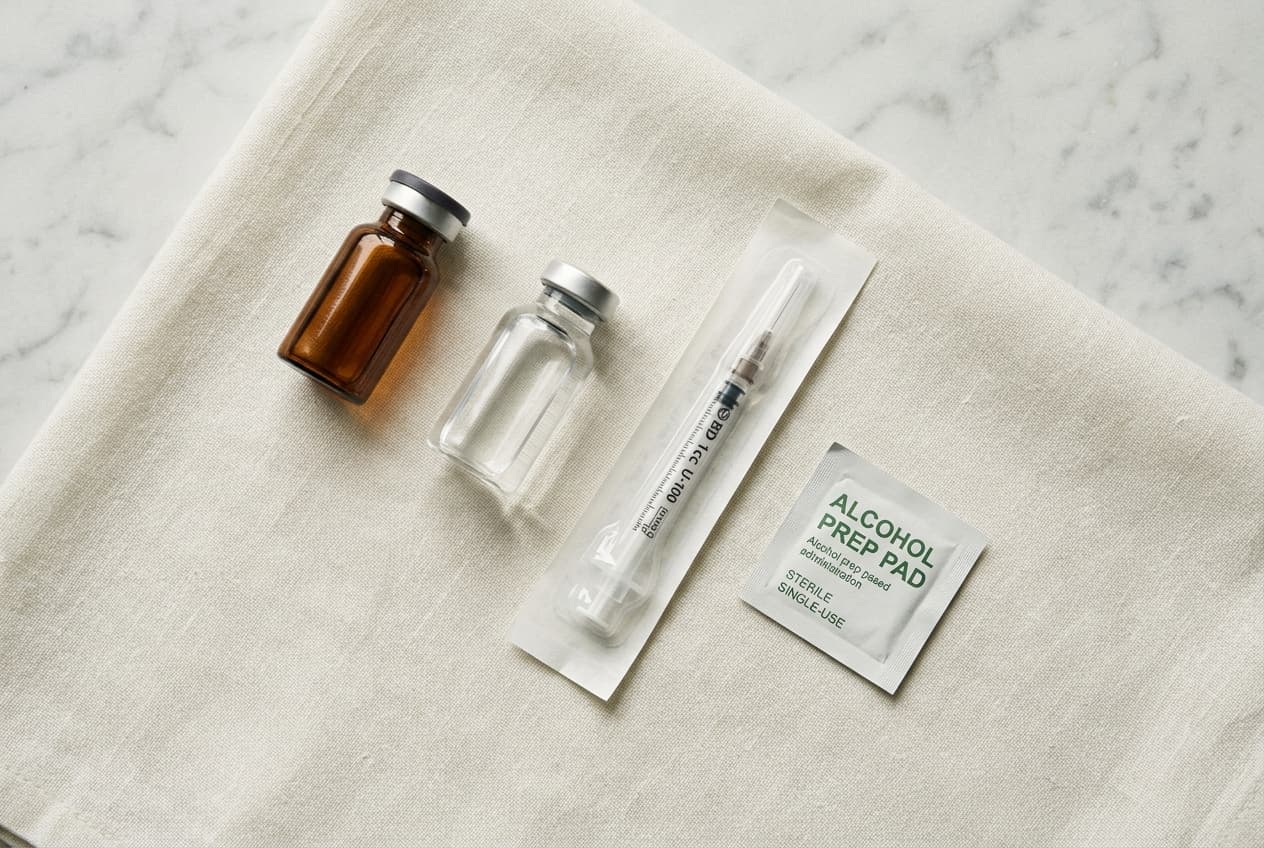
There is no approved formulation. Grey-market vials typically contain 5-10 mg of powder. A 5 mg vial reconstituted in 2 ml bacteriostatic water gives 2.5 mg per ml. A 1 mg dose draws 0.4 ml, or 40 units on a U-100 insulin syringe. Doses circulating online are extrapolated from mouse allometry without human PK data; treat the numbers as rough guesses, not protocols. Subcutaneous abdomen is the convention. None of this is grounded in human trial design.
Open calculator pre-filledStorage after reconstitution
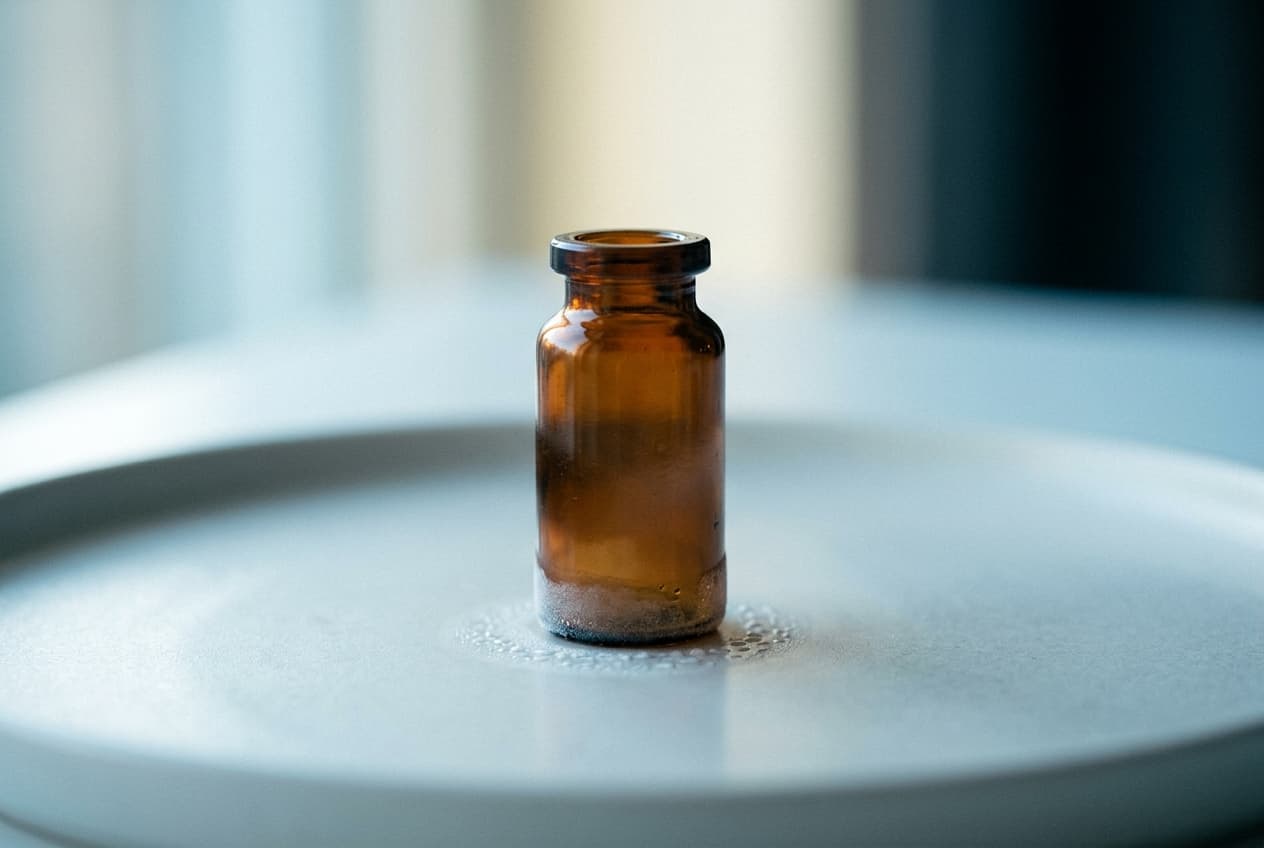
Research-grade powder — reconstitute small batches. Refrigerate at 2–8 °C after mixing, light-protected. Stability is poorly characterised; conservative window is 14 days at fridge temperature in BAC water. Given the lack of clinical safety data, the best practice is to mix only what you will use in 1–2 weeks and discard the rest rather than stretch one vial.
Common mistakes
Treating mouse doses as a starting point for human protocols.
Better approach: Allometric scaling from rodents to humans is the worst kind of guess - mouse metabolism is faster than ours, mouse surface-area-to-mass is different, and mouse studies dosed orally with vehicle, not subcutaneously. If you choose to use this compound, accept that any dose you pick is uninformed.
Stacking it with stimulants or thyroid agonists.
Better approach: The mechanism amplifies oxidative metabolism. Stacking it with anything else that does the same (T3, clenbuterol, high-dose caffeine) compounds cardiac strain risk in a compound where the cardiac safety profile is unknown. Run it alone if you run it at all.
Running it longer than 8 weeks.
Better approach: There is no chronic-toxicity data in any species at the doses people use. 4-8 weeks on, months off, is the cautious pattern - and honestly the better answer is to wait for human trials.
Sourcing from random online vendors.
Better approach: There is no approved manufacturing standard. If you are determined to try this, source from a vendor who provides third-party HPLC and mass-spec analysis on the batch you receive. Without it, you have no idea what powder is in the vial.
Real-world tips
- Honestly, the best tip is to wait. The human trial that will define this molecule has not been run. Whatever you learn from your own N-of-1 will be replaced by data in a few years.
- If you proceed anyway, track an objective endurance metric weekly (5k time, VO2 estimate, 1-mile pace) so you can tell whether the mechanism is doing anything for you.
- Avoid cardiovascular stress amplifiers in the same window - no high-stim pre-workouts, no thyroid pushing, no heavy alcohol use.
- Baseline labs at minimum: liver panel, CK, cardiac troponin if accessible, and a resting ECG. Repeat at week 4 and week 8.
- Stop immediately if you notice unusual chest discomfort, persistent tachycardia, or any new sign your heart is working harder than it should. The mechanism touches cardiac tissue.
When something else is the better tool
Actual endurance training
Use instead when: Always, before any exercise mimetic. The molecule that simulates training does not exist; SLU-PP-332 produces some of the muscle-level adaptations but does not deliver the cardiovascular, neural, and behavioural benefits of training. If you are running it because you do not want to train, the wrong tool is the one you are reaching for.
MOTS-c or AICAR
Use instead when: You want an exercise-mimetic peptide with a marginally longer anecdotal track record in the community, while still acknowledging that human data is thin. Different mechanisms, similar uncertainty, slightly more known about each.
Semaglutide or Tirzepatide
Use instead when: The fat-loss arm is the actual goal. The incretins have Phase 3 evidence; SLU-PP-332 has rodent data. Different evidence quality by an order of magnitude.
- Has anyone done a human trial?
- Not in any public registry as of this writing. The compound is academic; the path to a human trial requires an IND, funding, and a sponsor. None of those are visible.
- Is it really like exercise?
- In mice, it produces a subset of exercise adaptations - mitochondrial biogenesis, oxidative fibre profile changes, fat mass reduction. It does not replicate the cardiovascular, neural, and metabolic benefits of actual exercise. The 'exercise in a bottle' headline is journalism, not pharmacology.
- What dose should I use?
- Honest answer: nobody knows. The doses circulating online are extrapolations from mouse experiments. If you must, start lower than any vendor suggests, monitor labs, and stop at any signal.
- Is it safe?
- There is no human safety data. The honest answer is unknown. The mechanism touches tissues (cardiac, hepatic) where chronic pan-receptor agonism could plausibly cause problems. Wait for trials, or accept that you are running one.
- What about the other ERR agonists I see online?
- The grey market has started selling several research compounds in this class. Same answer applies to all of them: interesting mechanism, no human data, uncharacterised long-term effects. The mechanistic story is not a substitute for trials.