
Thymosin Alpha-1
Also known as: Tα1 · Zadaxin
A 28-amino-acid thymic peptide marketed as Zadaxin. Approved in over 30 countries for hepatitis B and C; used off-label for chronic infection and immune resilience.
Overview
Thymosin Alpha-1 is the most clinically established peptide in the immune-modulator category, which is not a high bar but does set it apart from the rest of the thymic family. Zadaxin has been approved in over thirty countries for hepatitis B and C, with adjunct use in oncology and sepsis trials. The mechanism is well-characterised: it enhances dendritic cell maturation and T-cell function, particularly in the context of viral infection or immune compromise. The off-label use case in healthy people running it for "immune resilience" is less well-supported but reasonable given the safety profile. It is not approved in the US, which is mostly a regulatory history note rather than a quality concern.
Evidence quality
Zadaxin (Thymosin Alpha-1) is approved in over thirty countries — Italy, Spain, China, Brazil, Argentina, and others — for chronic hepatitis B and C. Clinical trial data in hepatitis is the most substantial and dates back to the 1990s. Adjunct use in sepsis, oncology, and immunocompromised states is supported by smaller but real RCT data. Not FDA-approved in the United States, which reflects regulatory history rather than a quality concern. Off-label use in healthy adults for general immune resilience is reasonable but not separately trial-validated.
Benefits & timeline
Benefits
- Improves T-cell function and dendritic cell maturation in immunocompromised or chronically infected patients — well-documented mechanism
- Approved adjunct therapy for chronic hepatitis B and C in over thirty countries, including most of Europe and Asia
- Used in oncology supportive care, particularly during chemotherapy-induced immunosuppression
- Strong clinical safety record across decades of use — one of the cleanest profiles in the peptide catalogue
Timeline
Week 2
First subjective shifts — slightly better tolerance to physical and infectious stress.
Week 4–6
Lab markers (T-cell subsets, viral load in hepatitis protocols) start to move in clinical settings.
Week 8
Most healthy off-label users either feel a clear benefit by here or do not.
Week 12
End of the standard cycle. Continue at maintenance dose (once weekly) or take 4 weeks off depending on use case.
Dosage protocols
Advanced
1.6 mg
three times weekly
Beginner
800 mcg
twice weekly
Standard
1.6 mg
twice weekly
Titration & adjustment
Standard medical dosing: 1.6 mg subcutaneously twice weekly. Continue for 8–12 weeks. For chronic viral infections under clinical supervision, dosing may extend to 6 months. If immune labs improve, drop to maintenance of 1.6 mg once weekly.
Injection timing

Twice weekly, ideally morning. For chronic-infection protocols, consistency matters more than time-of-day — pick two fixed days (e.g. Monday and Thursday) and stick to them.
Side effects & contraindications

- mildInjection-site irritation — the most common complaint and usually mild.
- mildTransient muscle aches in the first week, sometimes described as a low-grade flu feeling.
- mildOccasional fatigue in the first 24–48 hours after injection.
- moderateTheoretical caution in active autoimmune disease — T-cell stimulation in the wrong direction is the concern, though clinical use in autoimmune populations has not produced obvious flare signals.
Contraindications
- Organ transplant recipients on immunosuppression — counterproductive to the therapy goal
- Active autoimmune flare — coordinate with a rheumatologist before adding immune-modulating peptides
- Pregnancy and breastfeeding (limited data, not a hard contraindication clinically but the conservative call)
- Concurrent IL-2 or other strong immune-stimulating therapy without oncology supervision
Reconstitution & injection
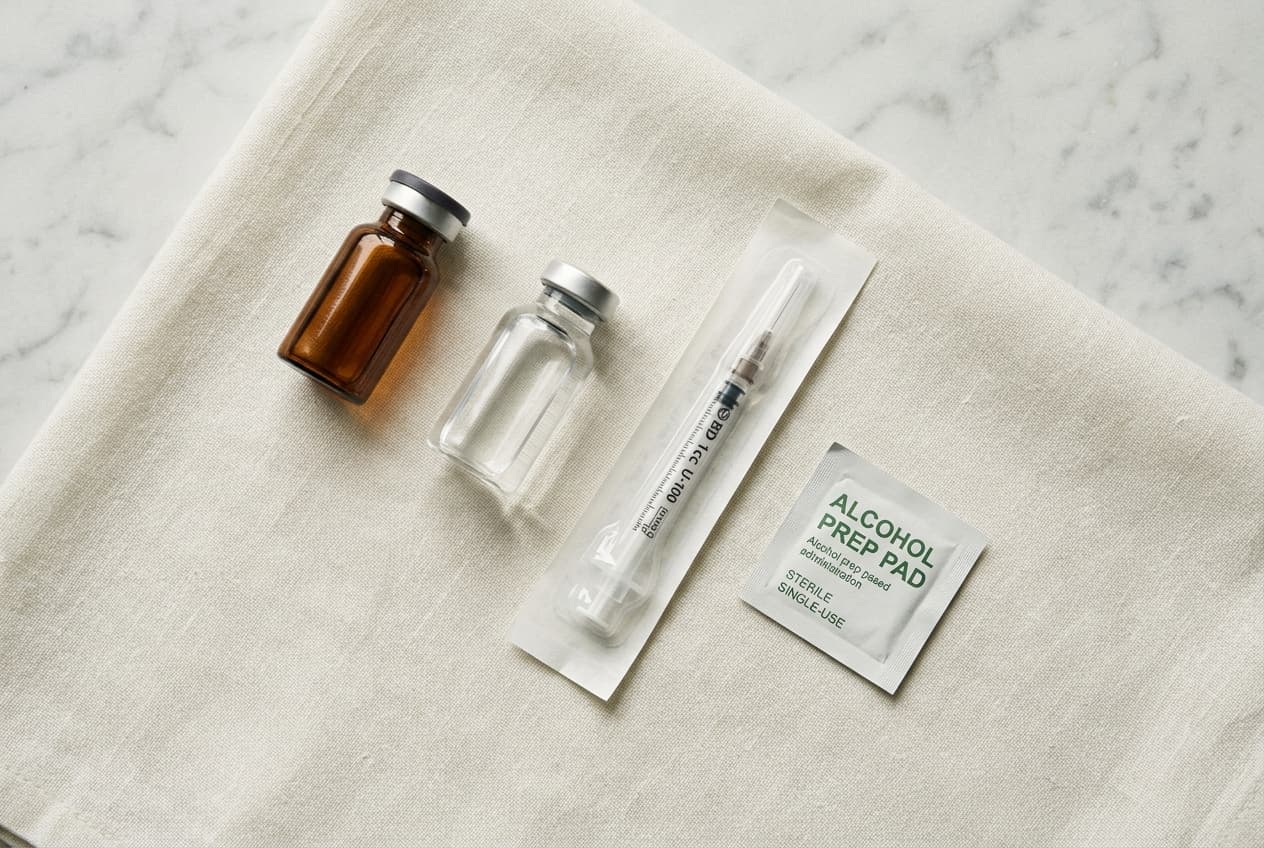
A 5 mg vial mixed with 5 ml bacteriostatic water gives 1 mg per ml. The standard 1.6 mg dose is 1.6 ml — too much for a single insulin syringe, so use a 3 ml syringe or split into two injections. Subcutaneous, abdomen or thigh, twice weekly on fixed days (Monday/Thursday is the convention). Refrigerate after reconstitution; stable for around four weeks. Zadaxin commercial vials come with their own diluent and follow the package insert.
Open calculator pre-filledStorage after reconstitution
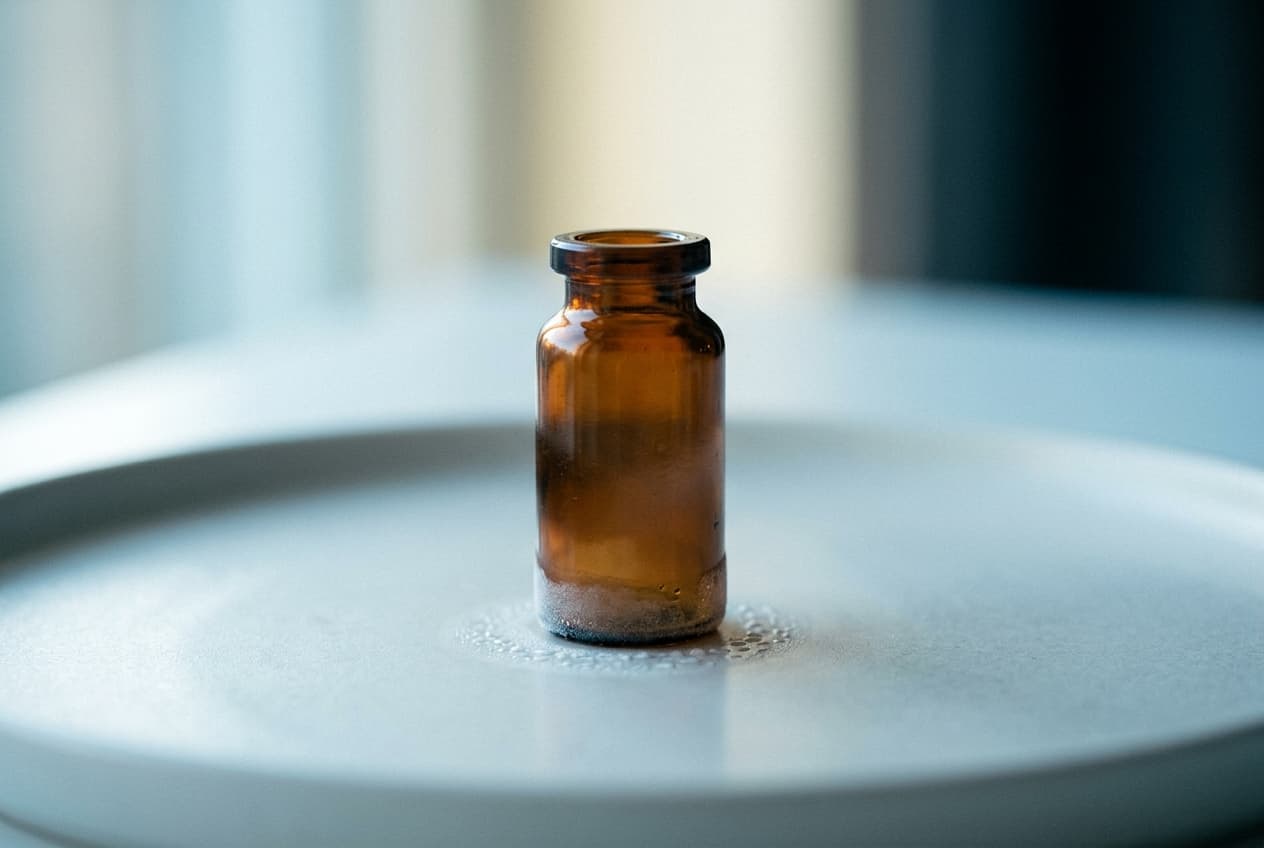
Refrigerate at 2–8 °C after reconstitution. Do not freeze. Light-protected. 28–30 days of stability at fridge temperature in BAC water. The molecule is robust in solution. The clinical product (Zadaxin) ships lyophilised with mannitol diluent for slightly better stability, but plain BAC water for research-grade gives comparable real-world shelf life.
Common mistakes
Inconsistent dosing days.
Better approach: Twice-weekly cadence works because it maintains a steady signal. Drifting from Monday/Thursday to whatever-day-I-remember dilutes the effect. Pick two fixed days, set a calendar reminder, treat it like a medication.
Confusing it with Thymalin and assuming the protocols are interchangeable.
Better approach: They are not. Thymosin Alpha-1 is dosed twice weekly for 8–12 weeks; Thymalin is a 10-day pulse with months off. Read the protocol that matches the peptide you actually have.
Running it during an active autoimmune flare "because the immune system needs support".
Better approach: Autoimmunity is an immune system attacking the wrong targets. Adding fuel does not redirect it. Get the flare controlled with the appropriate therapy first, then revisit whether immune-modulating peptides have any role.
Treating it as a cold-prevention vitamin.
Better approach: The clinical use case is chronic viral infection, immune compromise, and oncology support. "I get the sniffles in winter" is not what Zadaxin was developed for, and the cost-benefit at retail prices is poor for that use.
Real-world tips
- Fixed weekdays for the injection. Consistency beats time-of-day optimisation here.
- Track one objective marker if you are running it long-term — CBC with differential, or lymphocyte subsets if your clinic offers it.
- If you have a known chronic viral infection (CMV, EBV reactivation pattern, chronic hepatitis), coordinate with the relevant specialist. The peptide is approved for these uses in many countries and your clinician may already know it.
- Refrigerate. Discard at four weeks even if you have unused doses.
- If pairing with Thymalin, treat them as separate cycles rather than concurrent — easier to attribute any effect.
When something else is the better tool
Thymalin
Use instead when: You want the shorter pulse-protocol approach from the Soviet bioregulator tradition and the cost matters. The trade-off is much thinner Western trial evidence.
LL-37
Use instead when: The use case is direct antimicrobial action against a known infection rather than upstream immune support. LL-37 is the more aggressive, more targeted tool; Thymosin Alpha-1 is the upstream resilience play.
Doing nothing in a healthy adult
Use instead when: If you are otherwise healthy, sleep well, train, and do not have a chronic infection or immune compromise, the marginal benefit of Thymosin Alpha-1 is small and the cost is real. The peptide earns its place in patients with a defined immune problem, not as a wellness staple.
- Why isn't it approved in the US?
- The Zadaxin development path went through European and Asian regulators in the 1990s and the US filing never advanced to approval. Quality is not the issue — the same product is approved in over thirty countries and meets EMA-equivalent standards in most of them.
- How is it different from Thymalin?
- Thymosin Alpha-1 is a single, defined 28-amino-acid sequence with approved clinical indications. Thymalin is a multi-peptide fraction from thymic extracts with regional use only. Different molecules, different evidence base, different protocols.
- Can I use it during an active infection?
- Yes — this is closer to the on-label use than the prevention use. The peptide was developed for chronic viral infection and supportive use during acute illness is reasonable. For severe or systemic infection, this is an adjunct, not the primary therapy.
- Does it work for long COVID?
- Small case series and clinical reports suggest some patients improve. The evidence is preliminary and the use is off-label. If you are running it for post-viral fatigue, give it a fair 12-week trial and track one objective marker so you can decide honestly whether to continue.
- Can I run it indefinitely?
- In approved hepatitis protocols, dosing can extend to six months or longer under medical supervision. For off-label resilience use, 8–12 weeks on, 4 off, is the conventional rhythm. There is no strong evidence that indefinite dosing adds value in healthy adults.