Tirzepatide
Also known as: Mounjaro · Zepbound
Dual GIP and GLP-1 agonist. Beats Semaglutide head-to-head on weight loss and glycaemic control, and is becoming the default first-line choice when both are available.
Overview
Tirzepatide pulls on two incretin levers at once: GLP-1 like Semaglutide, plus GIP, a second gut hormone that potentiates insulin release and appears to modulate appetite through a slightly different central pathway. The SURPASS programme (type 2 diabetes) and SURMOUNT programme (obesity) put it at the front of every comparison: ~21% body-weight loss at 15 mg over 72 weeks in SURMOUNT-1, vs the ~15% Semaglutide delivers at 2.4 mg. Mounjaro launched for diabetes in 2022, Zepbound for obesity in 2023. The added potency comes with proportionally more GI side effects during titration, but the curve flattens once you settle at a maintenance dose.
Evidence quality
FDA-approved 2022 for type 2 diabetes (Mounjaro) and 2023 for chronic weight management (Zepbound); EMA approval followed. The SURPASS 1–5 diabetes trials and SURMOUNT 1–4 obesity trials constitute the largest randomised dataset of any dual incretin. SURMOUNT-1 vs STEP 1 is the cleanest head-to-head proxy, and SURPASS-2 was a direct comparison: Tirzepatide came out ahead on both weight and HbA1c.
Benefits & timeline
Benefits
- Average 20–22% body-weight reduction at the 15 mg dose over 72 weeks (SURMOUNT-1)
- Stronger HbA1c reduction than Semaglutide in head-to-head trials (SURPASS-2 showed roughly 0.5 percentage points more)
- Powerful blunting of hedonic food cravings — ultra-processed and high-fat items lose their pull most noticeably
- Often tolerated at maintenance by users who could not stay on escalated Semaglutide
Timeline
Week 1–4
Starter 2.5 mg dose — not therapeutic, just to break in the gut. Appetite already shifting.
Week 8
On 5 mg or 7.5 mg. Most users have lost 3–5 kg and notice they think about food less.
Week 16
Climbing to 10 mg. Weekly loss steady; meals feel structurally smaller, not just lower-calorie.
Week 24–36
Approaching or holding 15 mg. Loss continues but slows. Body recomposition becomes visible.
Week 72+
SURMOUNT-1 endpoint. Most users sit on a maintenance dose indefinitely or have plateaued at their personal target.
Dosage protocols
Advanced
15 mg
once weekly
Maximum dose; stronger effect than Semaglutide.
Beginner
2.5 mg
once weekly
Starting/titration dose.
Standard
7.5 mg
once weekly
Titrate up by 2.5 mg every 4 weeks.
Titration & adjustment
Start at 2.5 mg once weekly for 4 weeks (titration dose only, not therapeutic). Escalate by 2.5 mg every 4 weeks: 5 → 7.5 → 10 → 12.5 → 15 mg. Most users do not need the maximum dose. Drop back one step if nausea, vomiting, or severe early satiety prevents adequate nutrition. When discontinuing, taper down by one step every 2 weeks to soften the appetite rebound. Stay at any dose for as long as it is delivering progress — there is no benefit in escalating just because the next step exists.
Injection timing

Same as Semaglutide — same weekday each week, morning is most common. Avoid dosing late evening on a meal-heavy day because gastric slowing can leave you uncomfortable overnight. Miss-dose rule: ≤4 days catch up, >4 days skip.
Side effects & contraindications

- moderateNausea, often more pronounced than with Semaglutide in users who have tried both. Worst at each escalation step.
- moderateVomiting in roughly 10% of users at top doses — usually a signal to drop back a step.
- mildConstipation and reflux. The slowed gastric emptying is the same mechanism causing both.
- mildSulphur burps. Distinctive enough that users on forums coined the name; not dangerous, but unpleasant.
- severePancreatitis and gallbladder events are rare but real. Same black-box warning for medullary thyroid carcinoma as Semaglutide.
Contraindications
- Personal or family history of medullary thyroid carcinoma or MEN-2 syndrome
- Active or recent pancreatitis
- Severe gastroparesis — symptoms will worsen substantially
- Pregnancy or attempting to conceive — plan a 2-month washout given the half-life and target tissue
- Type 1 diabetes outside research protocols
Reconstitution & injection
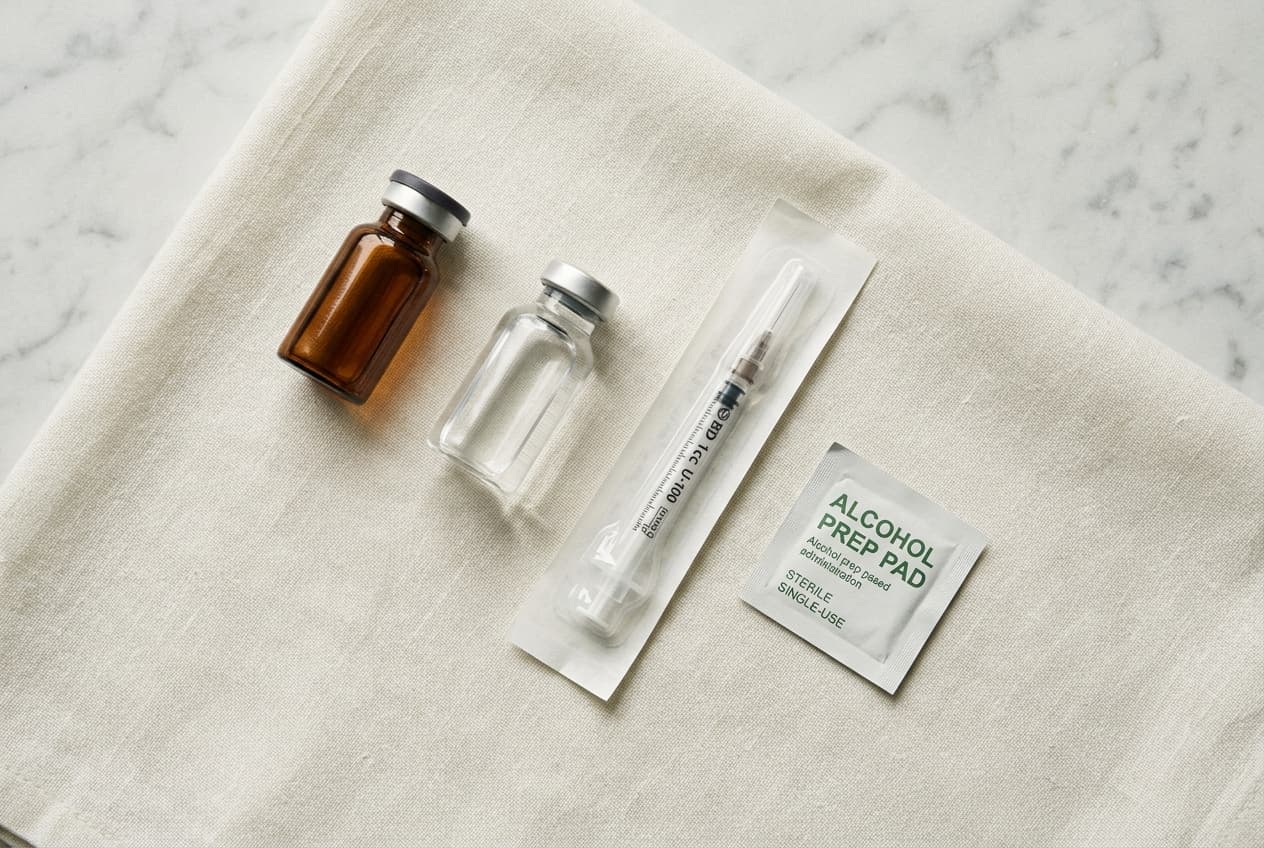
Mounjaro and Zepbound ship as single-use pens with a fixed dose. For research-grade vials, a 10 mg vial reconstituted with 2 ml bacteriostatic water gives 5 mg/ml — a 2.5 mg starter dose draws 0.5 ml, or 50 units on a U-100 insulin syringe. Subcutaneous injection into abdomen, outer thigh, or upper arm. Rotate sites weekly. Once mixed, fridge storage maintains potency for at least 4 weeks; do not freeze.
Open calculator pre-filledStorage after reconstitution
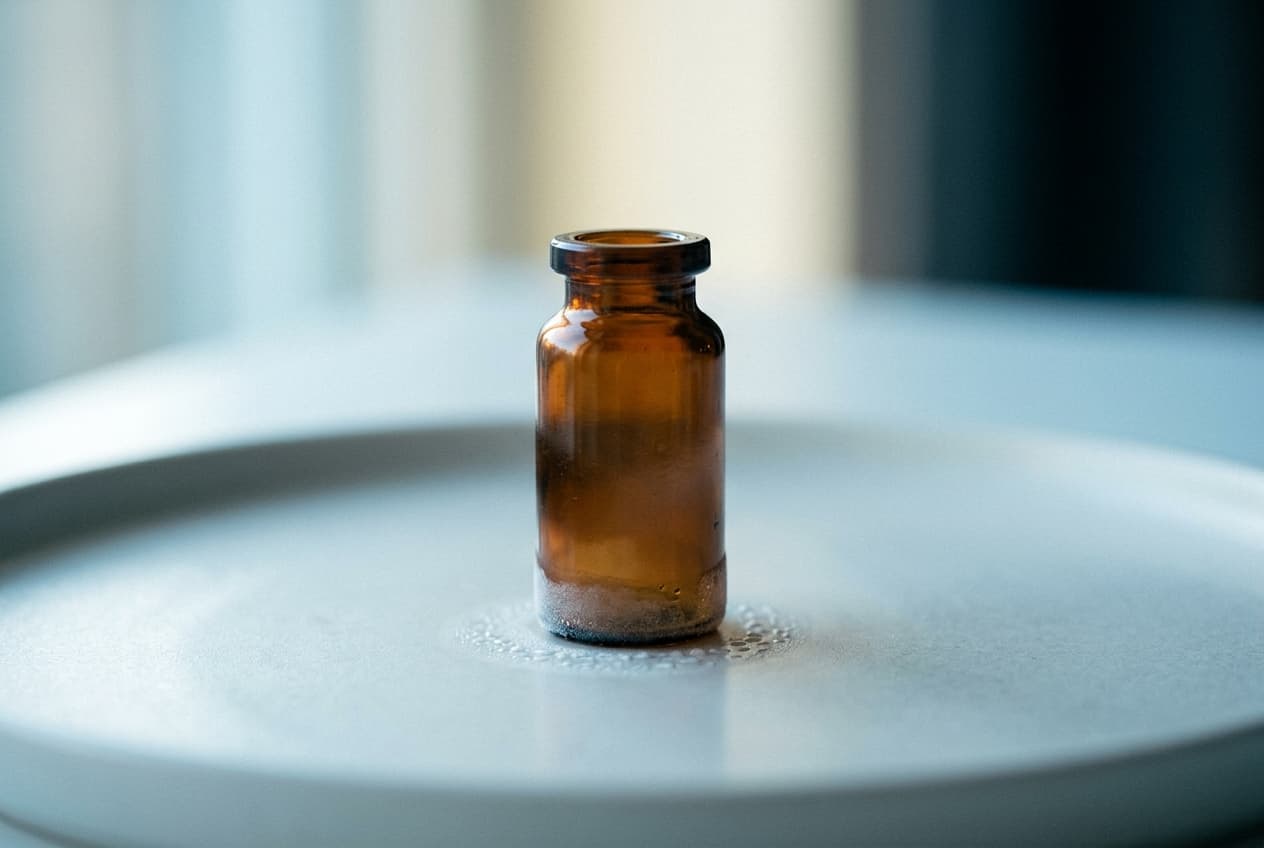
Refrigerate at 2–8 °C immediately after mixing. Do not freeze. Protect from light — store in the original carton. Reconstituted vials are stable for 4 weeks (28 days) at fridge temperature with no meaningful potency loss. Cold injections sting, so take the vial out 15–20 minutes before drawing. Always inspect: clear and colourless = good, cloudy or particulate = discard. If you accidentally left the vial at room temperature for under 12 hours, it is still usable; over 24 hours, throw it out.
Common mistakes
Skipping the 2.5 mg starter dose because 'it's not therapeutic anyway'.
Better approach: The starter dose is gut acclimation, not weight loss. People who jump straight to 5 mg often vomit hard enough that they pause the drug entirely and lose more time than the 4-week starter would have cost. Take the starter dose, then escalate.
Treating 15 mg as the goal rather than a ceiling.
Better approach: The dose-response curve flattens above 10 mg for many users. If you are losing steadily at 7.5 or 10 mg, there is no benefit and obvious cost to climbing higher. Stay at the lowest dose that is delivering progress.
Not eating enough protein because nothing tastes good.
Better approach: The appetite suppression at higher doses can be severe. Set a daily protein floor of 1.6 g per kg of target body weight and treat it as non-negotiable, even if you have to dose timing around it (often the only hungry window is mid-morning the day before injection). Without this, lean-mass loss becomes the silent cost of the drug.
Reusing the same injection site week after week.
Better approach: Lipohypertrophy reduces absorption and pits the skin. Run a four-week rotation: abdomen left, abdomen right, thigh, arm. Mark the calendar if you cannot remember.
Real-world tips
- Inject on a non-social evening if you can. The 24-hour post-injection window is when GI side effects peak; you do not want to ride those out at a dinner party.
- Bland protein on injection night: chicken breast, eggs, Greek yoghurt. Greasy or spicy food is exactly the wrong cue.
- Sulphur burps respond surprisingly well to bismuth subsalicylate (Pepto-Bismol). Keep a bottle around for the first month.
- Resistance training matters more on Tirzepatide than on Semaglutide because the loss is faster, so the lean-mass risk is higher.
- If your dose feels too strong, drop one step rather than skipping a week. Skipping creates an appetite rebound at the wrong moment.
- Cold pens sting. Warm to room temperature for 15–20 minutes before injecting.
When something else is the better tool
Semaglutide
Use instead when: Cost is the deciding factor (Semaglutide is often cheaper compounded) or you have already responded well to a GLP-1 and have no reason to switch mechanisms. Semaglutide has the longer cardiovascular outcomes dataset (SELECT).
Retatrutide
Use instead when: You have plateaued on Tirzepatide at the maximum dose and have access to research-grade Retatrutide. The triple agonist adds glucagon-mediated energy expenditure on top, but you trade an approved drug for an investigational one.
Bariatric surgery
Use instead when: BMI is above 40, you have failed multiple pharmacological attempts, or the comorbidities (sleep apnoea, severe NAFLD, diabetes refractory to medication) make speed and durability of effect critical. Surgery still produces larger and more durable loss than any current peptide, with proportionally higher risk.
- How is it different from Semaglutide in practice?
- More weight loss, more nausea early on, similar long-term tolerability. The dual-receptor mechanism is the only honest mechanistic difference; everything else is degree.
- Do I need to taper off?
- There is no withdrawal in the pharmacological sense — you will not feel sick. But appetite returns sharply, and a step-down (one dose level every 2 weeks) softens the rebound enough to give you time to adjust your eating.
- Can I rotate Tirzepatide and Semaglutide?
- Some users do, mostly to manage cost. No trial supports the practice and the two have different titration schedules, so each switch is essentially starting over. It is not a recommended strategy.
- Why are the sulphur burps a thing?
- Delayed gastric emptying leaves food sitting longer, and the proteins ferment slightly, producing hydrogen sulphide. It is uncomfortable but harmless.
- Will my insurance cover it?
- Wildly variable. Coverage for diabetes (Mounjaro) is usually easier than for obesity (Zepbound). Many users pay out of pocket or use compounded versions; compounded purity is the variable to verify if you go that route.